Homeward Bound by Mark

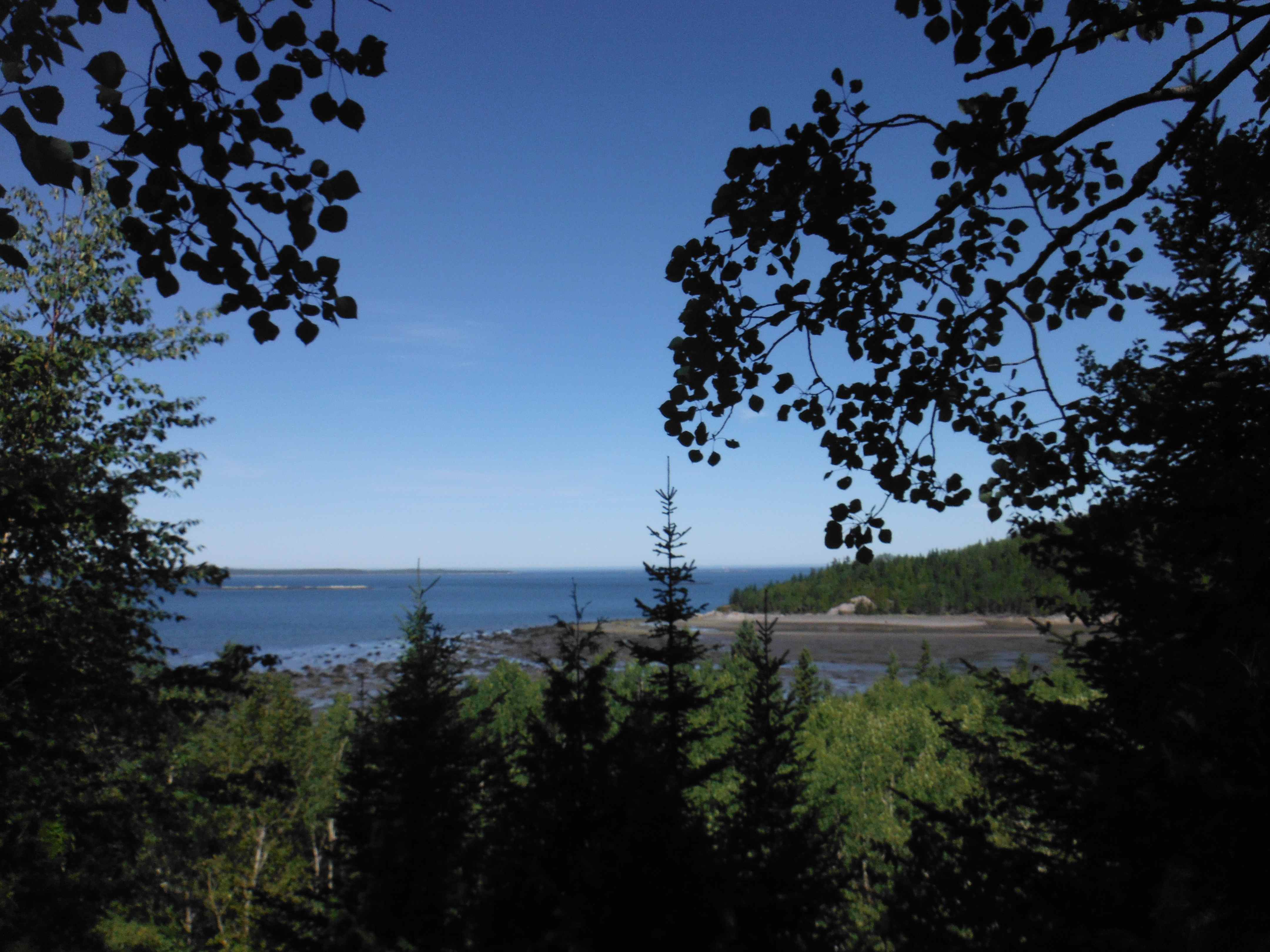
Overlooking the St. Lawrence seaway.  Not a palm tree in sight.

Overlooking the St. Lawrence seaway. Not a palm tree in sight.

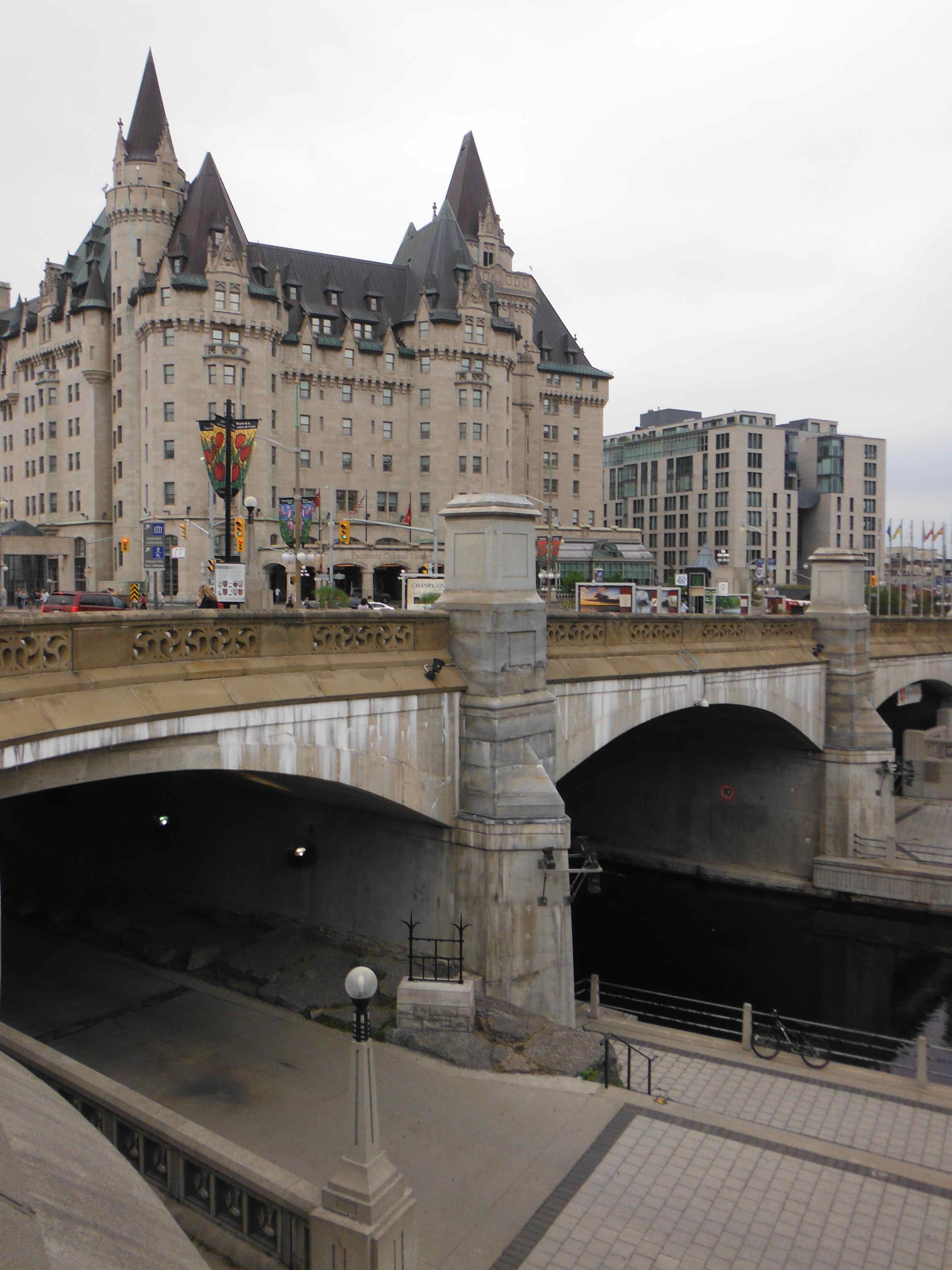
The Fairmont Chateau Laurier over the Rideau Canal in Ottawa.

The Fairmont Chateau Laurier over the Rideau Canal in Ottawa.

We took a tour of parliament and went back one night to watch a phenomenal light show projected onto the parliament building that told the history of Canada.

http://www.canadascapital.gc.ca/celebrate/mosaic

Windows at the War Museum in Ottawa are morse code, can you read the message?

Windows at the War Museum in Ottawa are morse code, can you read the message?

Visiting the Canadian War Museum with Laura and Graeme.

Visiting the Canadian War Museum with Laura and Graeme.

As we drove down towards the docks we were greeted by a by a strikingly tall man wearing a

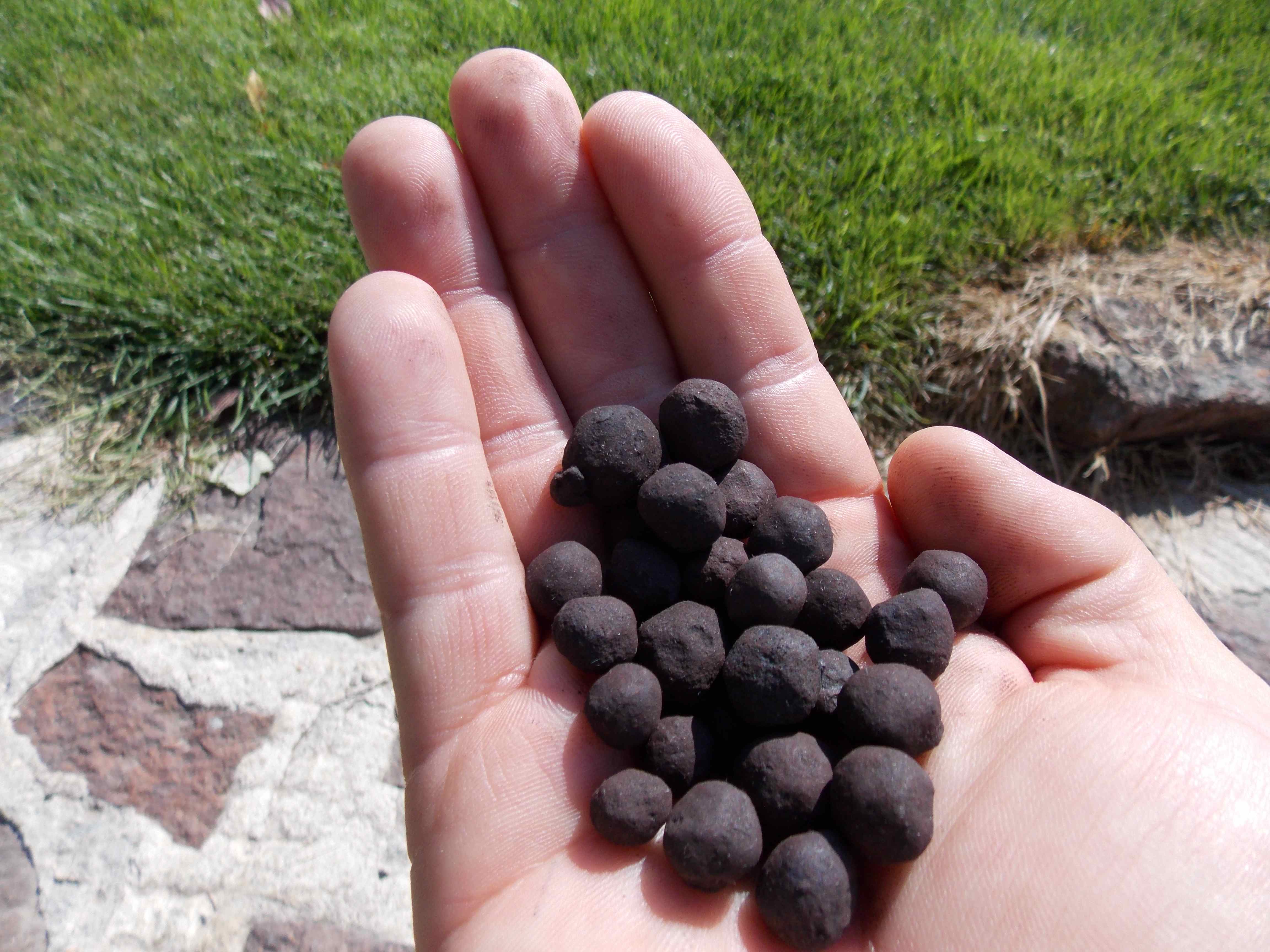
Handfull of taconite pellets.

Handfull of taconite pellets.

Lake Superior tugboat.

Lake Superior tugboat.

The wheel took 24 rotations to move the rudder from stop to stop.  The reduction gears in the steering mechanism looked like a bulletproof system of gears connecting to chains that disappeared into the hull, somehow finding their way to the rudder.  In addition to the tour of his tugboat we were also given a short history of shipping on the great lakes and a handful of taconite souvenirs before going on our way.

Back in the car we continued on towards South Dakota, crossing the Mississippi and Missouri rivers, making it all the way to the badlands before calling it a day.  We knew we had arrived back in the west when we were serenaded to sleep by several coyotes that evening.

Sunset over the Missouri river.

Sunset over the Missouri river.

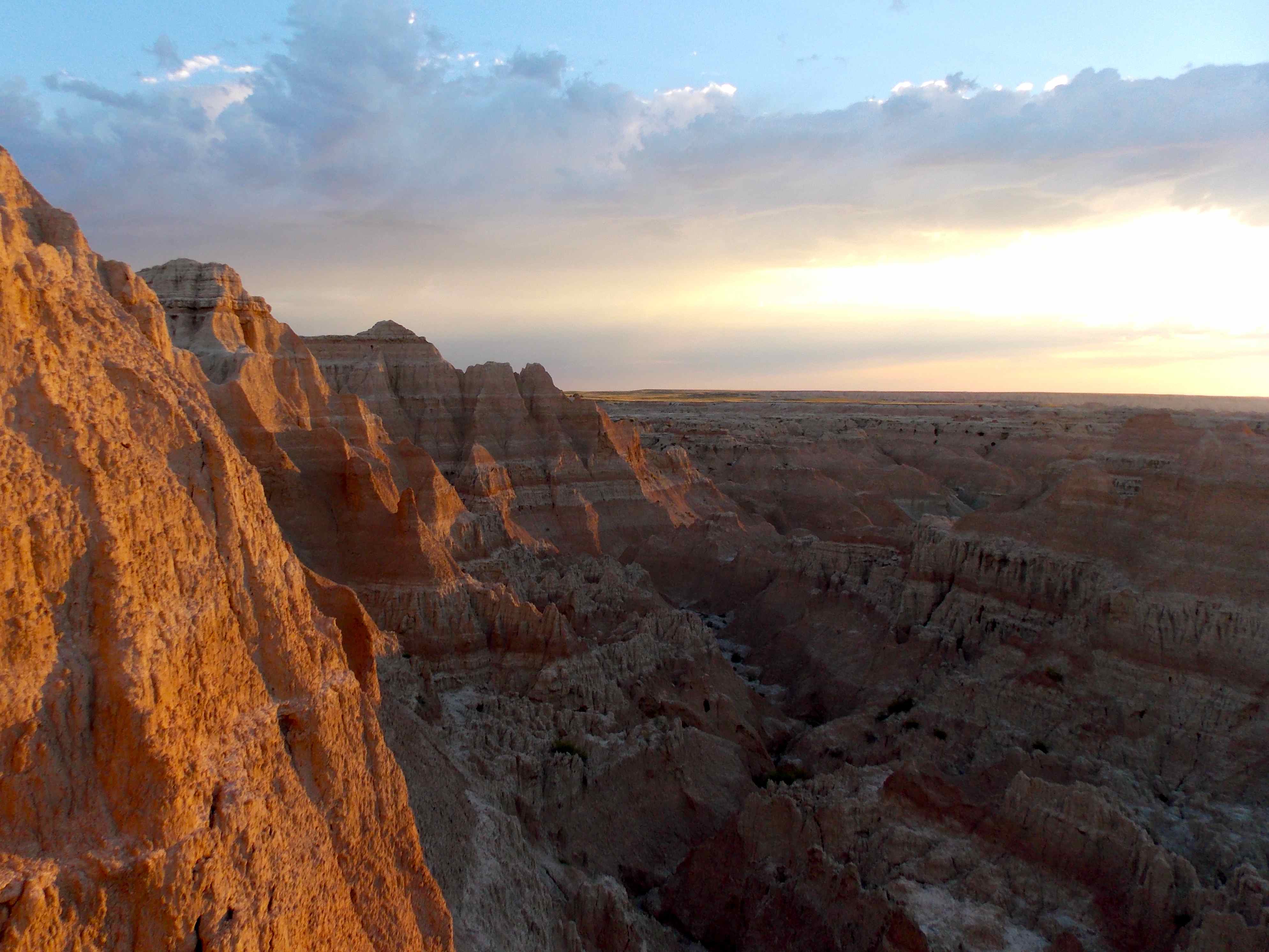
Sunrise in the badlands SD.

Sunrise in the badlands SD.

Badland bighorns.

Badlands bighorns.

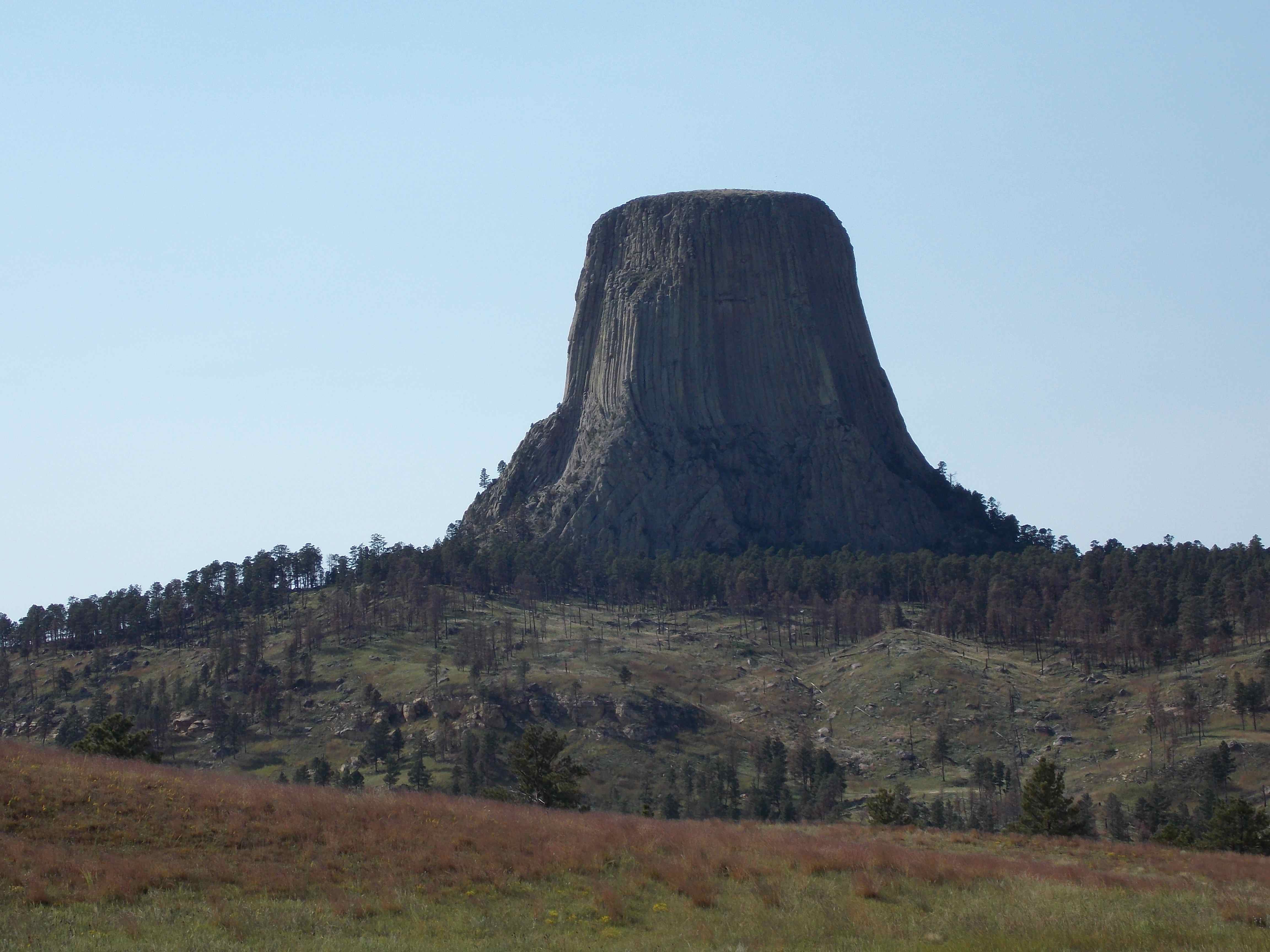
At first light we broke camp and enjoyed the sunrise over the badlands and ate our Cheerios out of a bowl on the side of the road.  Next stop Mt. Rushmore.  It was a good experience to see Mt. Rushmore, and an even better one, because we had just visited the homes of Washington and Jefferson.   Lincoln was familiar because of his involvement in the civil war sites we had also driven past.  What we didn’t know was that Roosevelt had declared our next stop the United States first national monument.  Any guesses?  It’s Devil’s Tower, WY.

Devils Tower WY.

Devils Tower, WY.

Our parting shot.

Our parting shot.

The next day we crossed the Idaho state line with a hip-hip-hurray and by 7pm were pulling into our friends driveway, The Reynolds, back home in Boise.  We had been gone 365 days to the day, and what a year it has been!  Ironically, these friends were the last people we saw when we left Idaho too.

Last stop before we get to Boise!

Last stop before we get to Boise.  Everybody out.

As if a reminder of what we had accomplished, this truck passed us just before we drove into Boise.

As if a reminder of what we had accomplished, this truck passed us just before we drove into Boise.  You may grab life by the horns but grab your sharks by the tail!

Lessons Learned by Mark

Now that we are officially back on land and have sold our sailboat, we’ve had some time to reflect on our trip.  We also thought it might be helpful to pass on some of the lessons we learned along the way to others who have similar aspirations or to those who just want to compare notes.  I divided the information into five categories that include buying and selling a boat, equipment and maintenance, safety, provisioning and finally home schooling.

Buying and selling the boat:  While there has already been volumes written about purchasing and selling a boat, what was unique about our experience was that we never expected to purchase the boat we eventually bought. To make a long story short, I had been searching for a more blue water boat.  Unfortunately, many of the boats of that caliber in our price range needed too much work and we would have never left the dock.  Our Hunter 37 which is considered a coastal cruiser was found by a friend in Florida who was convinced that this was the boat for us.  Our Hunter really hadn’t been sailed very much by the pervious owner, which isn’t exactly a good thing, but it had spent most of its life on a fresh water lake, which is. Consequently, even though the rigging was old, it was still in good condition.

When we considered what we were going to do with the boat, we concluded that we weren’t really going to be crossing a big ocean anyway so why not buy the coastal cruiser?  It was ten years newer than anything else I had looked at, it was beamy for spaciousness below deck, and it even had an aft cabin, something that would be a real advantage to a family of four!

Of all the items that can need work on a boat, I was mostly concerned with the following four:  sails, engine, rigging, and delamination in the deck or hull.  While our boat wasn’t perfect, it was in extremely good shape for its age.  Any problems that were found in the survey were reasons to further negotiate the price.  She was a diamond in the rough for sure, but we were able to negotiate the price a little lower because of it.  That being said, I ended up having to do more to the boat than I expected to get it ready for our trip, but it’s my understanding that is almost always the case!

Along the way we continued making improvements to the boat, straightening out the running rigging, fixing all the wiring, adding LED and replacing the faucets, many of the improvements weren’t expensive but the result was a boat that showed well.  The biggest project was sanding and refinishing the floors which took time but made the boat look 10 years younger.
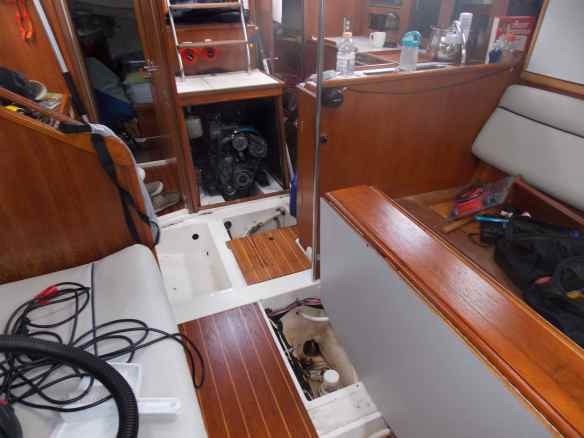
Refinishing floors one section at a time.

Refinishing floors one section at a time.

When we moved onto the boat, several thru hulls were leaking.  Replacing the sea cocks, hoses and installing a new prop and shaft as well as bottom paint were the biggest expenses in part because it required 2 haul outs.
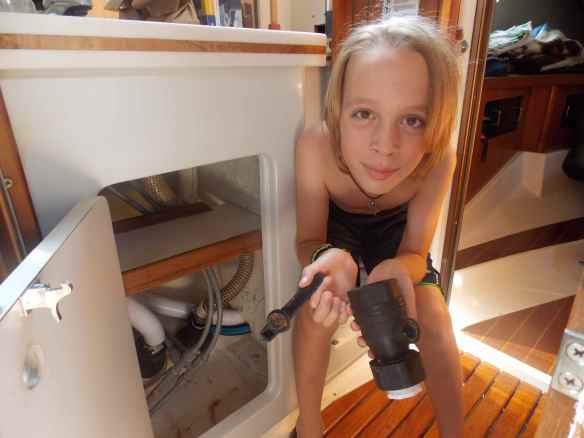
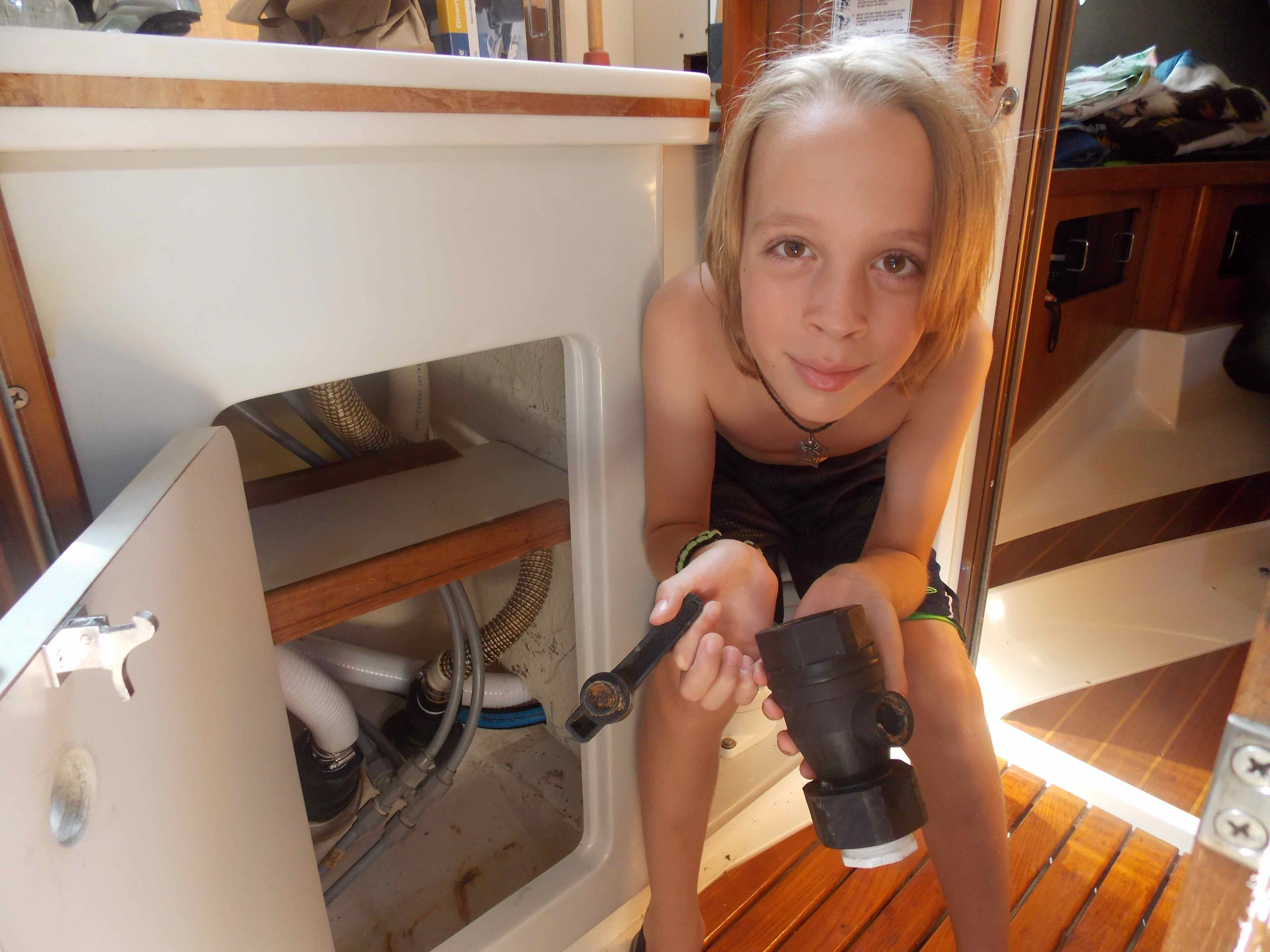
When the handle falls off your seacock you might want to replace it!

When the handle falls off your seacock you might want to replace it!

In the end, we had a boat that was in much better condition than when we started.  At the end of our trip, when we made it back to Florida, we advertised the boat on Craigslist and on sailboatlisting.com.  We priced the boat just slightly less than similar boats on the market and felt confident that ours looked better and was better equipped than any of the other boats on-line.  Finally we took an entire day cleaning out a room at a time and took the best pictures we could, using a wide-angle lens.  We sold the boat to the first couple that came to look at her which was fortuitous but it is important to add, I think, that we were able to pass on a good deal on the boat to the new owners because of what we saved when we bought a boat that needed a little work.

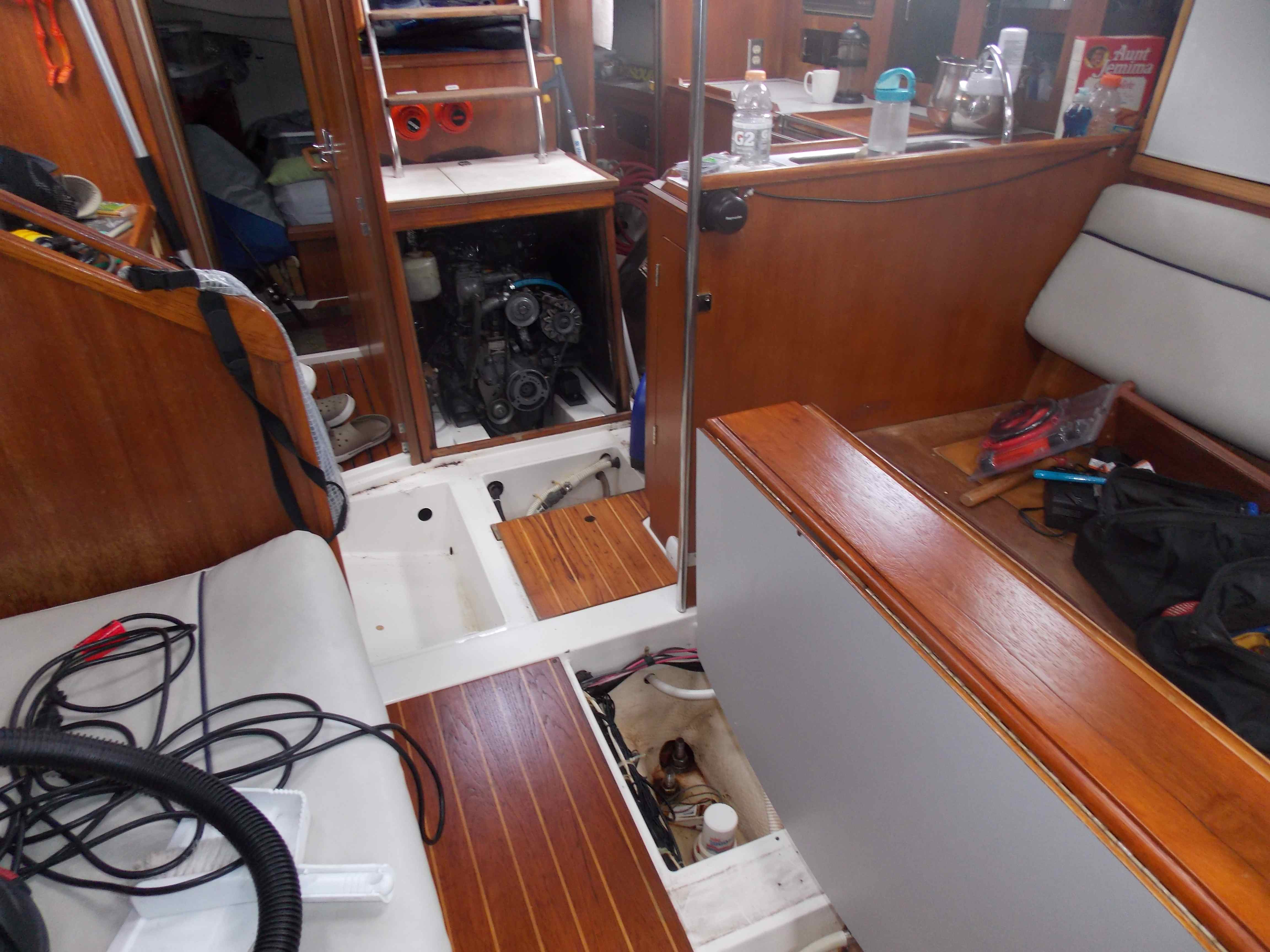
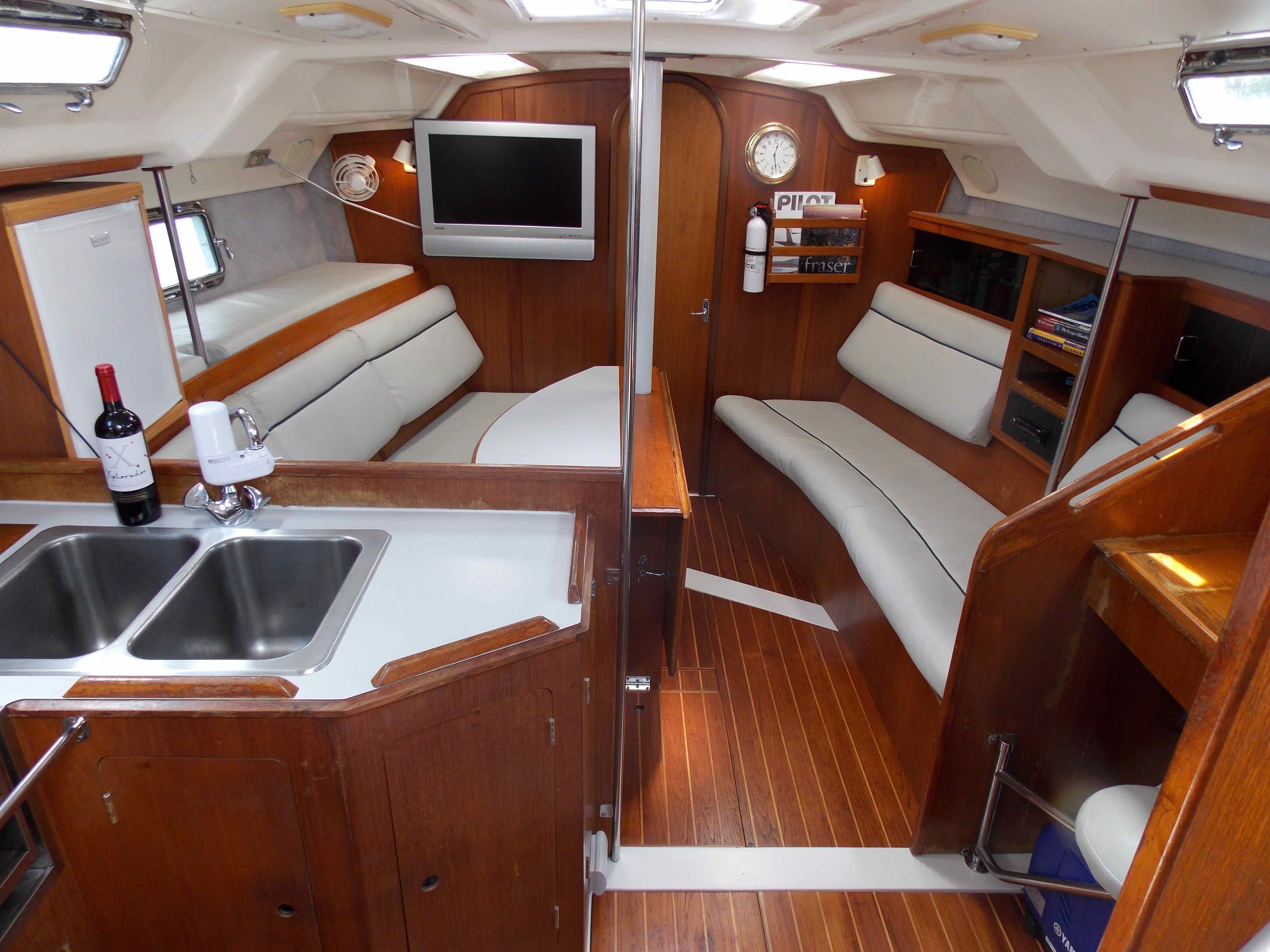
Main salon.

Main salon.

ll6

Vberth

Aft cabin.

Aft cabin.

ll8

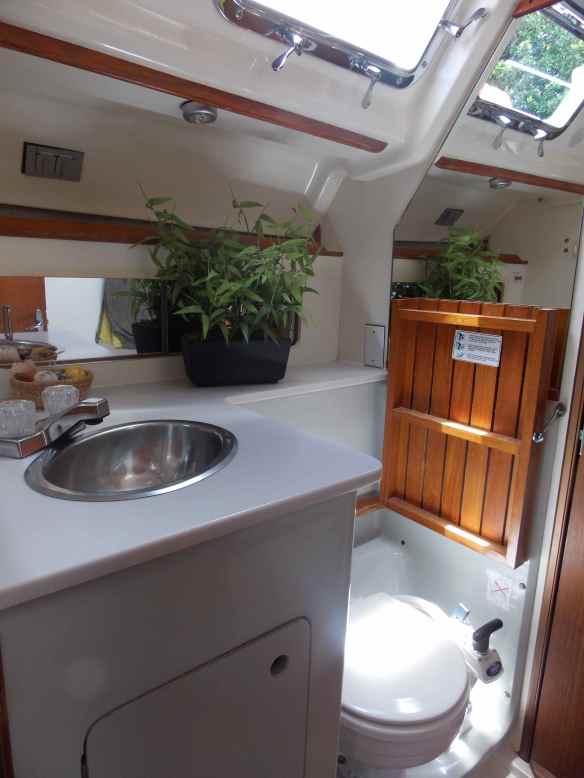
Head

Equipment and Maintenance:  It’s safe to say that every piece of equipment on a boat has a certain life expectancy.  Usually the surveyor on a boat will inspect the sails and rigging for signs of fatigue but my experience on Truansea taught me to pay close attention to all of the hoses and engine components too.  During our trip, I replaced both water pumps and the lift pump.  I replaced the heater hoses that ran to the hot water heater because they had nearly chaffed completely through.  The exhaust hose was nearly rotted through, and I replaced the raw water hose to the head because of excessive cracking.  Boat U.S. states that any hose over ten years old should be suspect.  Finally when replacing your hoses, always double clamp beneath the waterline using high quality hose clamps.

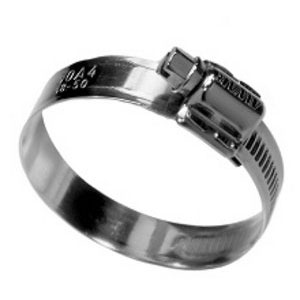
indented rather than stamped hose clamps are less prone to failure and corrosion.

Indented rather than stamped hose clamps are less prone to failure and corrosion.

hose clammp fail2

Failed hose clamp

Don’t forget to inspect the mixing elbow on the exhaust system as well.  It is constantly exposed to high temperatures and saltwater, a recipe for corrosion!

When it came to maintenance of the engine, I opened and inspected the heat exchanger before we left the dock.  I replaced the raw water impeller, belts and fuel filters.  The fuel tank was polished to remove any sediment that might get stirred up in high seas.  In retrospect, some of the fuel in the Bahamas was dirty and it would have been nice to have a baja filter for fueling.  Because my fuel filter was rather small, I changed the primary filter every 100 hours along with the oil.  In place of a Baha filter, I sacrificed an old t-shirt to filter the fuel going into the tank.

Replacing the fuel filter when you buy a boat is clearly a good idea.

Replacing the fuel filter when you buy a boat is clearly a good idea.

Unless I had already just replaced the pumps on a marine engine, I would now keep spares on the boat if I was going to venture very far offshore.

Safety:  By far the most useful safety item we had on the boat besides our life jackets was our satellite phone. When our water pump failed in the middle of our crossing back to the states our sat phone was our only link in contacting Boat US and notifying the Coast Guard of our position.  Of course, we had an EPIRB as well, but the main advantage of the sat phone is the ability for two-way communication.

http://www.explorersatellite.com

We always kept a ditch bag handy.  In it were flares for nighttime, smoke flares for daytime, signal mirror, a flashlight with laser pointer & SOS signal.  We packed a handheld VHF with our sat phone and a hand-held GPS loaded with blue water charts. Finally, we threw in a few easy open cans of food and a couple quarts of water.

Had we been making longer crossings on going further south, we would have invested in a lifeboat.  As it was, our dinghy was our life raft.  We kept a horseshoe buoy and a lifesling on the stern rail.  Christine and I wore coastal inflatable life jackets and bought used harnesses and tethers at Sailorman in Fort Lauderdale.  Buying used equipment at Sailorman saved us hundreds on the outfitting of our boat.

Sailorman, a gold mine of used sailing equipment!

Sailorman, a gold mine of used sailing equipment!

Provisioning:  This was really my wife’s department, and she did a good job of stocking  the boat until the waterline disappeared!  Her posts already touched on the subject of provisioning so I’ll be brief.  Only to say that how you provision will be a function of your ability to refrigerate.  It takes a fair amount of power to keep food cold or frozen on a boat hence all of the solar panels and wind generators on cruising boats. Since we didn’t start our trip with solar or wind power we ate a good deal of TVP (textured vegetable protein) on our trip and it’s actually not too bad as a meat substitute.  Christine even added it to a white sauce when she made biscuits and gravy.  We bought along non-refrigerated meats like pepperoni for pizza night and summer sausage kept fine without refrigeration.

Home Schooling:  Our strategy for homeschooling was following a couple of 4th and 5th grade curriculum workbooks.  In addition to the workbooks, we taught whatever was at hand when the opportunity presented itself.  We learned about Columbus in the Bahamas, Ponce de Leon in Florida and Blackbeard in Beaufort, NC.  We made timelines using the dates of significant events that had occurred along our route in the past such as the Civil War, etc.  Where we could, we watched historical reenactments and spoke with biologists in the field.

Seeing turtles, dolphins and sharks in the wild reinforced their understanding of animals in their natural habitat.

Learning about sharks in Bimini.

Learning about sharks in Bimini.

In this way, we covered our bases using the workbooks which provided a wealth of learning without using a ton of boat space.  But the real learning was in the doing.  Charting led to discussions of latitude and longitude.  Of course nothing teaches weather like watching a waterspout.  Our boat was a floating laboratory with new lessons everyday.
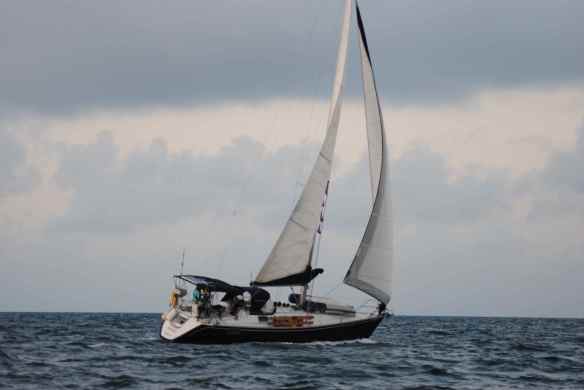
The world is your classroom.

Let the world be your classroom.

My opinion about schooling kids on a boat remains the same as it was before we started our adventure.  Schools would gladly teach all their students exactly as we did this last year if they could.  I have no doubt the rewards of an education afloat will be long-lasting.

Fair Winds,

Mark
Mission Accomplished by Christine and Mark

It did not occur to us, until recently, what a monumental goal we accomplished this year.fam done really

The sailors we have met working our way north in the states have given us a new appreciation and sense of pride for what we did.  Many people we met have been working toward their goal of sailing to the Bahamas and they cannot believe we got the boat ready to go and provisioned in 2 months, let alone sailed all the places we did this past year.  It took hearing this from at least 7 sailors we met before we understood what an accomplishment  it was.

Some of these people have been trying to go for years.  One we met has been trying to get to the Bahamas for 8 years.  For some, the weather window never seems to open up or they did not get their provisions and missed weather windows.  For others, boat repairs keep them at the docks.  Some solo sailors decide they need crew but cannot find the right person to go along.  Some want to gain more experience first.  Some run out of money before they cast off.  The list goes on.

The first realization we came to was that boat repairs are never done.  You have to decide what is absolutely necessary, thus stopping the outflow of money and leave.  Second, stuff as many provisions as you can in the boat before you go.  Whatever you forgot or run out of, you will either do without or another cruiser may have brought what you need.  Third, there is rarely a perfect weather window.  Be selective, but also be ready to move when the opportunity presents itself.  If it is too bad, you can turn back and wait a day or week and try again.

Looking back, being at the dock getting ready to go was the hardest part.  Once we cast off, it was much, much easier.  Not only did we make our goal, we set several new goals as we went and were able to make every one of them.  Our original plan was to take a year off with the kids and sail to the Bahamas, with a destination of Georgetown, at the end of the Exuma Islands.  We thought if we made it all the way down there, we would be lucky.

After arriving in George Town, relatively unscathed, we decided next to sail to Elethera, then the Abacos.  With summer approaching, we knew we wanted to be back in Florida where we could hole up if tropical storms or hurricanes threatened.  Many cruisers told us, “You have to do the ICW,” so we continued up the coast in the ICW all the way to its beginning in Norfolk.  After that, we continued north into the Chesapeake Bay, up the Rappehannock River where we are ending our journey on Truansea.  What is in store for Truansea next?  I can’t wait to share that with you, but that is another blog post.  Stay tuned.

The blue track is our road trip.  The red line is our sailing track.

The blue track is our road trip. The red line is our sailing track.  Our road trip was 2800 miles and we sailed over 1600 nautical miles.

If you have your own adventure waiting inside you, it has been said that the journey of 1,000 miles begins with a single step.  Take it.

Fair Winds ~ Christine and Mark

The Pelagics by Mark

From time to time, on our trip to the Bahamas and up the ICW, we have crossed paths with a few sailors that have, shall we say, global iteneriarys.  It was always so fascinating to talk with these pelagic sailors that I wanted to update you on their progress.

Mike and Jennifer are now in Tahaite.

Mike and Jennifer are now in Tahiti.

While getting our boat ready to go in Florida, we met Mike and Jennifer on board Mahili.  They left Florida just before we did and have since transited the Panama Canal and sailed on to Tahiti.

We used to see them frequently making runs to McDonalds hardware in Ft. Lauderdale.  Mike was easy to spot wearing his signature blue terry cloth hat.  The skeleton that they gave the boys for haloween hung over our nav table for the duration of our trip.

They blog as they go and you can see their story on Facebook. MikeJenniferGough  mahili_au@yahoo.com

At the start of our journey, the first cruiser we met when we realized we weren’t in Kansas, or should I say Idaho anymore, remains at large in the Bahamas.  David on s/v Mist never ran short of stories to tell and our boys will always remember him as the ultimate sailor.  Unfortunately, you won’t find him on facebook.  You’ll have to discover him yourself but the best way to describe him would be a combination of Joshua Slocum and Tristan Jones!

David showing the boys what they used to do with pirates.

David showing the boys what they used to do with pirates.

Whenever I look back on the time he helped me change our exhaust hose, I tend to get that sinking feeling when I think what our trip would have been like without his help.

I have to admit, I never made this post until now because we were lucky not to have this hose blow out on us in the Bahamas and I didn’t want to tempt fate.  I understand now why sailors became so superstitious.

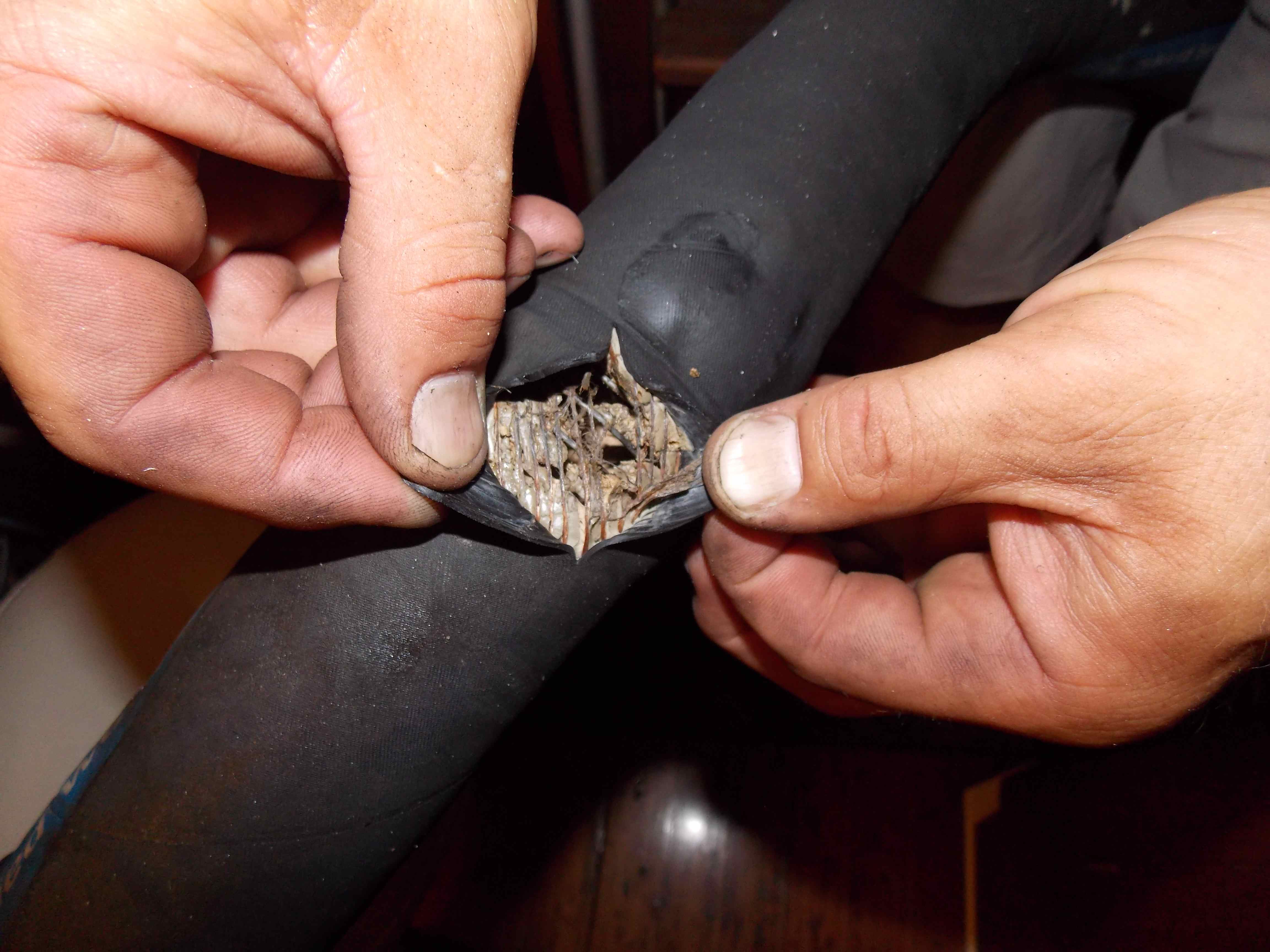
The exhaust hose was ready to go at any time.

The exhaust hose was ready to go at any time.

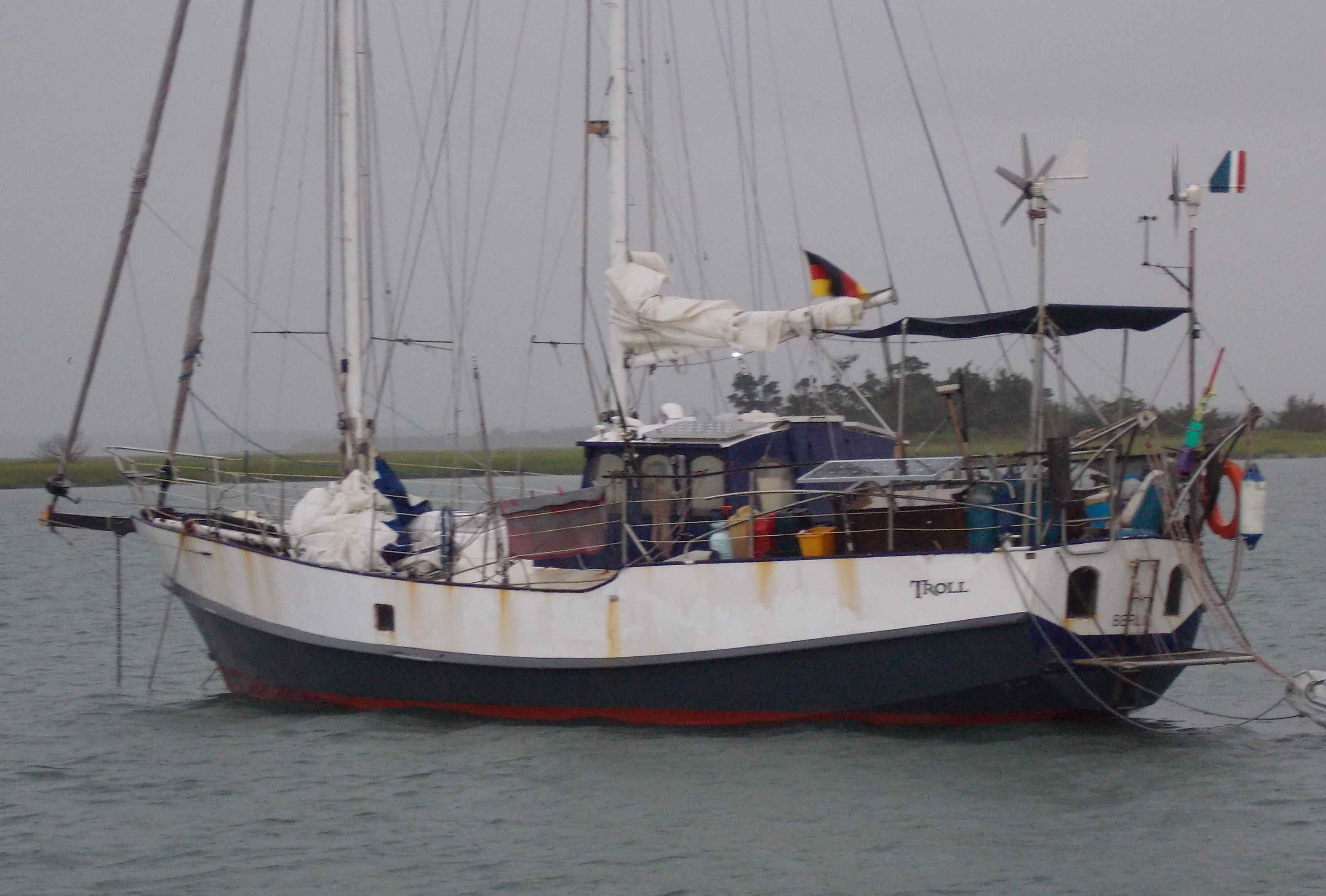
Finally, there was the meeting of Tom and Susi on s/v Troll.  They had put to sea from Germany

The mighty "Troll".

The mighty “Troll”.

After cruising as far south as Uraguay, they began looking for another vessel more suitable for sailing in the colder North Atlantic.  They sold Their catamaran and bought “Troll”, a steel schooner in St. Martin.  We met them in Beaufort, NC on their way to Annapolis.  They had a few projects to work on before heading up to Newfoundland, Greenland, Iceland and back to Germany.

I asked Tom if there were facilities for doing boat work in Greenland and Iceland, he appeared unconcerned and said, “They have welders which is really all we need because Troll is more like a fishing boat than a yacht.

Mark

Waiting Out the Weather in Beaufort, NC by Mark

We arrived in Beaufort, NC on June 23rd and took a slip at Town Creek Marina.  When we returned to Florida we listed our boat for sale. A couple had seen our listing for Truansea and wanted to take a look at her before we arrived in the Chesapeake.

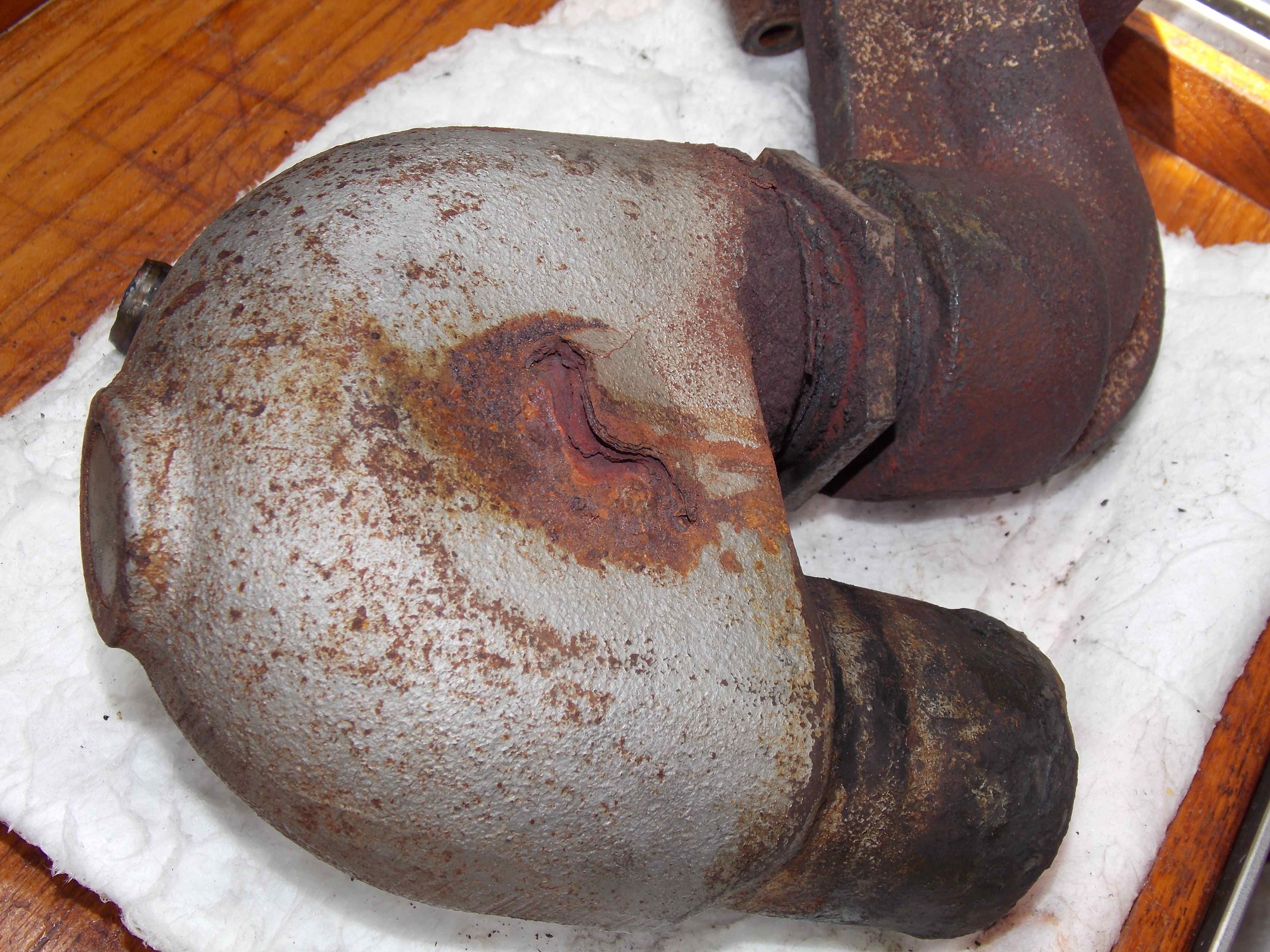
On the way up to Beaufort I noticed a few drips of diesel coming from a couple of compression washers on the fuel line that needed replacing.  Luckily the owner of the marina was working on his day off and I was able to buy the parts I needed.  After replacing the washers and bleeding the fuel lines, I noticed some new corrosion on the exhaust mixing elbow.  This could be a significant problem as I had learned from several other cruisers and although I had inspected the elbow before we left on this trip, we have also put 300 more hours on the engine.  Once again I was in luck, the marina had the elbow I needed in stock and even let me use their workbench to wrench the parts together.  The last thing I wanted was an exhaust leak with prospective buyers arriving the next day.

Old exhaust elbow starting to fail.

Old exhaust elbow starting to fail.

Installing new elbow.

Installing new elbow.

John and Marty enjoying a sail on Truansea.

John and Marty enjoying a sail on Truansea.

We took our guests, John and Marty, for a sail the next day.  With perfect wind at 15 knots, Truansea was sailing in the groove.  John brought a couple of harmonicas along for the boys and home schooled us all on the blues.  As soon as the weather lets up we will head north for a survey.

As is usual at a marina, we started meeting other sailors as we walked the docks.  At the end of one of the piers floated the classic boats a Pearson and a Swan 36.  We met their owners Mike and Eric.  Mike also owns a houseboat at the marina where he lives but takes his Pearson out sailing on the weekends or whenever the opportunity/wind permits.

Eric on Black Robe.

Eric on Black Robe.

Eric who is from Halfway, Oregon found his Swan on EBay in the Grand Cayman Islands.  He bought the boat there and sailed her back to the US. His advice for purchasing a boat in another country is to find a surveyor who can take a preliminary look at the boat to make sure the boat is being fairly represented before purchasing the ticket to see for yourself.  He was making repairs (as are all boaters) to his boomvang then heading out the Beaufort inlet to the Atlantic for an outside crossing to Charleston SC.  Mike was going to accompany him south and they were provisioning the boat while they also wait for a break in the weather.

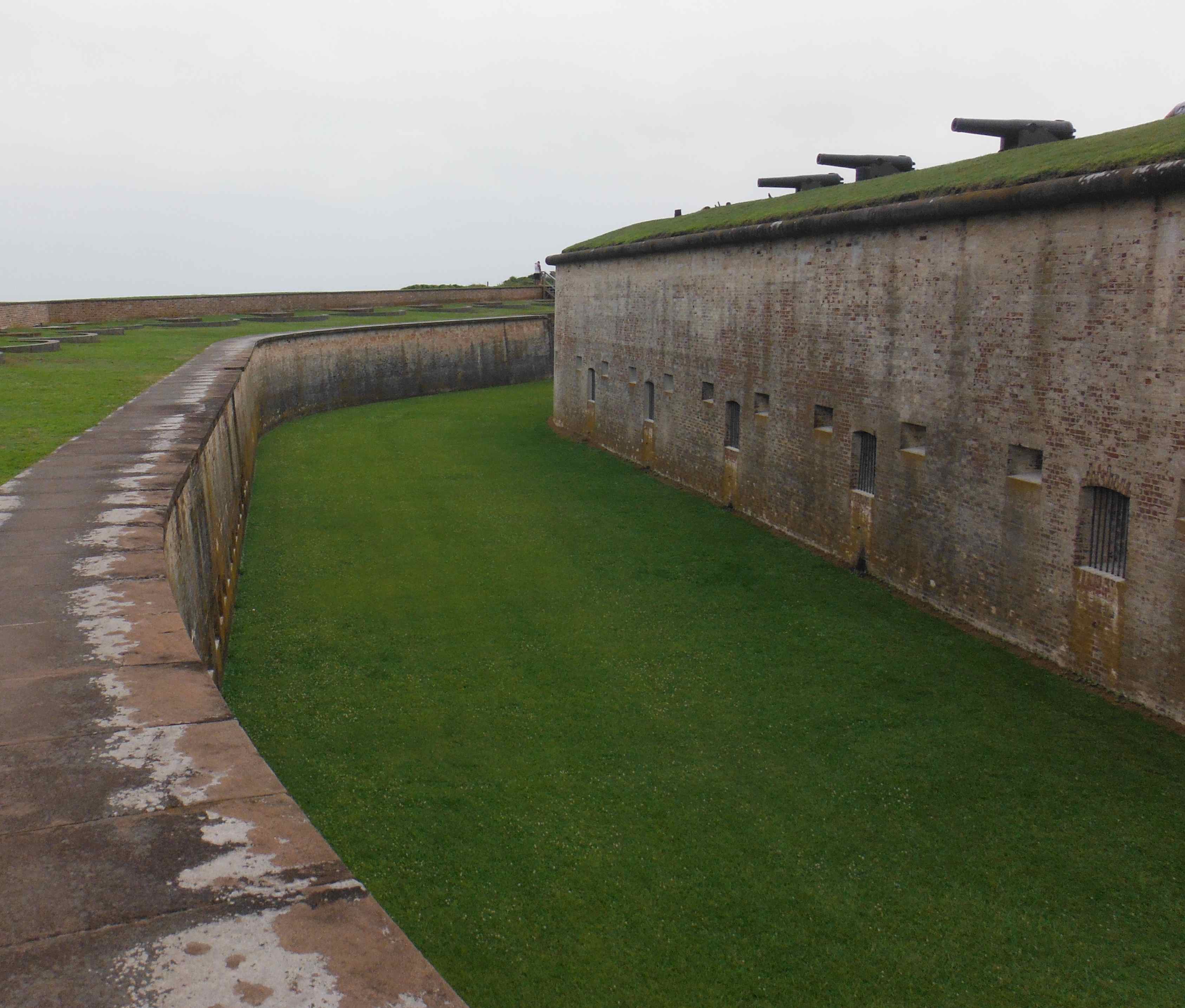
Since the winds have blowing anywhere between 20 and 35 knots for the last several days, we decided to rent a car and visit the North Carolina Aquarium at Pine Knoll Shores and also see Fort Macon.  The fort was built after the war of 1812 proved how vulnerable the nations coasts were to attack.  The Confederate army briefly held the fort during the Civil War before being recaptured by Union forces after 11 hours of constant shelling.

Fort Macon.

Fort Macon.

Preparing to fire a mortar.

Preparing to fire a mortar.

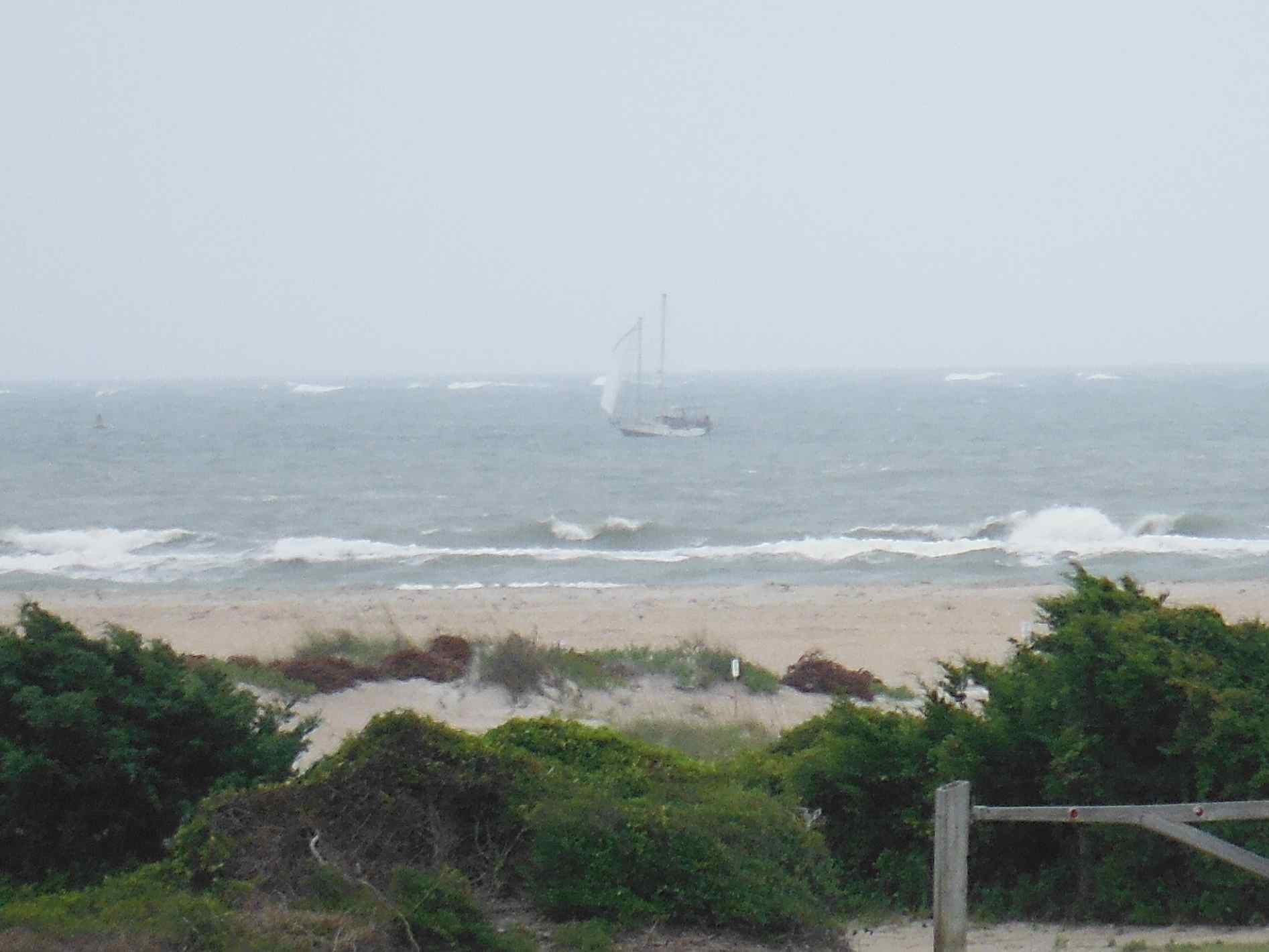
A sailboat that caught our eye seen from Fort Macon coming into Beaufort is S/V Troll.

A sailboat that caught our eye seen from Fort Macon coming into Beaufort is S/V Troll.

The town of Beaufort is rich in maritime history.  Blackbeard’s ship, the Queen Anne’s Revenge was recently rediscovered where she sank after running aground outside Beaufort inlet. Artifacts from the wreck can be seen at the Maritime Museum in Beaufort.

The man who puts the ship in the bottle!

The man who puts the ship in the bottle!

The town also has a fascinating cemetery with graves dating back to the 1700s.  A brochure to some of the gravesites of interest can be picked up at the historical center and list, among other things, the grave of an officer in the British Navy who died on board his ship.  Not wanting to be buried with his boots off, he was buried standing up in full uniform.

Burying grounds In Beaufort.

Burying grounds In Beaufort.

The Third Pump’s the Charm – Foxtown, Abacos to Ft. Pierce, FL – by Mark’

We departed from Foxtown on Thursday after topping off on fuel and headed to Great Sale Cay.  Had we known we were going to be towed the last 40 miles of our crossing, I could have passed on adding those last 5 gallons to our fuel reserves, but who knew we were about to experience an engine failure that would leave us stranded in the Gulf Stream.

Storm clouds billowing in the distance.

Storm clouds billowing up behind us in the distance.

The winds were light leaving Foxtown so we motored until we were north of Great Sale, then turned south and were able to raise our sails until we reached the anchorage on the south side of the island.  No sooner had we dropped our anchor than we were hailed by our friends on s/v Makana.  They were continuing straight through to Ft. Pierce.  Taking the opportunity to sail with another boat, we raised our anchor and headed east.

On the way across the bank Logan put out a fishing rod.  I was quite certain all we would catch on the bank would be barracuda but when something struck our bait and started spooling out the line, we quickly realized we had something much bigger than another barracuda.  Christine put the boat in neutral while I reeled in a 2 1/2 foot long Mutton Snapper.  Christine put the boat back in gear and I lit the grill!

Mutton snapper!

Mutton snapper!

We watched the sun set on yet another beautiful day in the Bahamas after finishing our fresh fish dinner.  Nearly off the Little Bahama Bank, we thought life couldn’t get any better.  Little did we know the day was about to take a turn for the worse!

crossing 7

Cole watching the sun set.

crossing 5

Sailing towards another sunset.

Christine and the boys were sleeping when the engine temperature alarm sounded at 11:30 that night waking everyone to the unpleasant reality that our engine had overheated.  Christine pulled the kill switch on the engine after being abruptly woken up and took the helm while I went below to look at the engine.

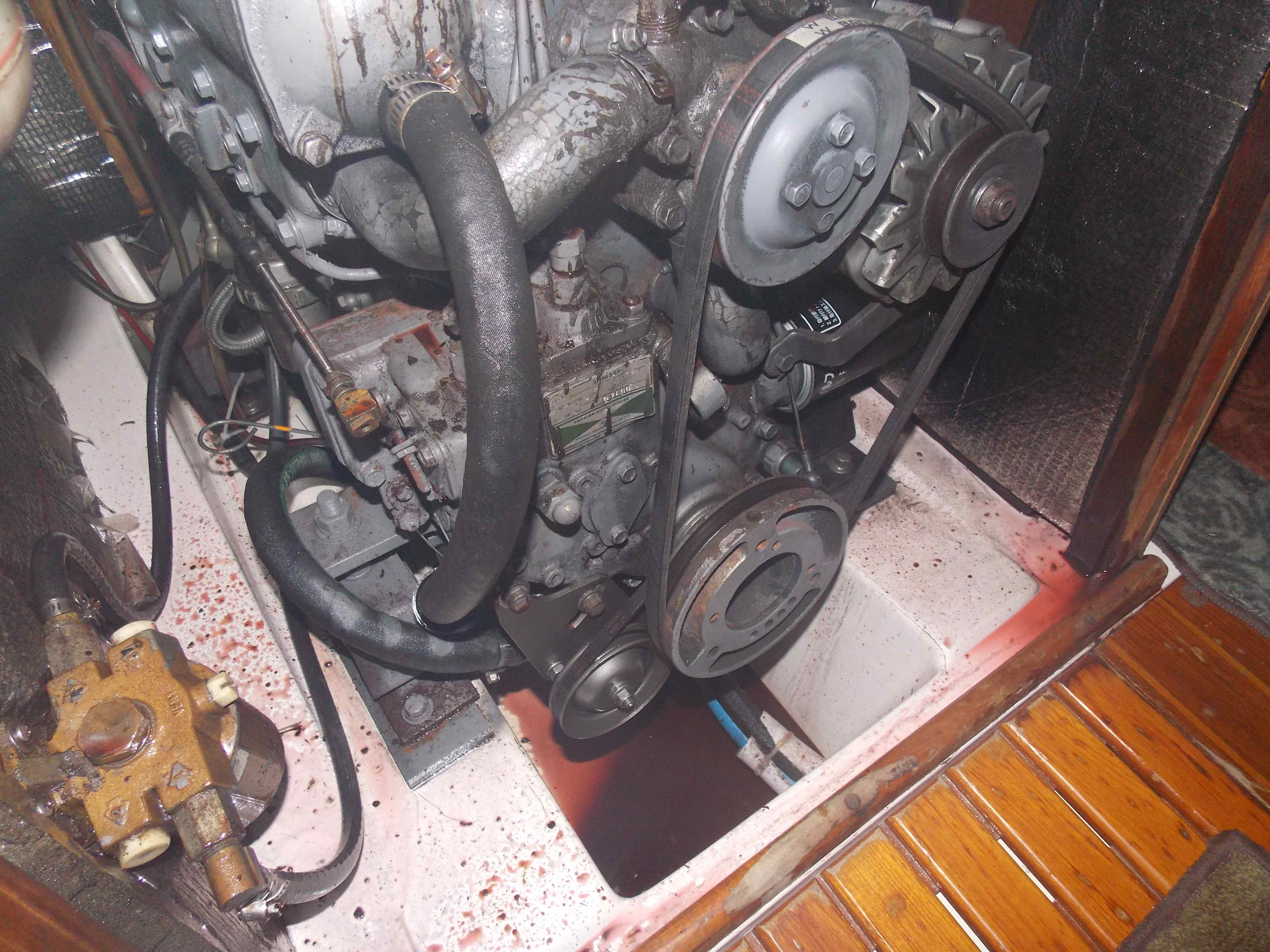
The engine compartment was awash in coolant.  We hailed Makana on the radio and they waited while I searched for the source of the leak.  It didn’t take long to realize the bearings on the fresh water pump had let go.  After replacing the lift pump and the raw water pump last month, the freshwater pump decided to go as well.  We wouldn’t be motoring back to Florida.

crossing 8

Coolant sprayed throughout the engine compartment.

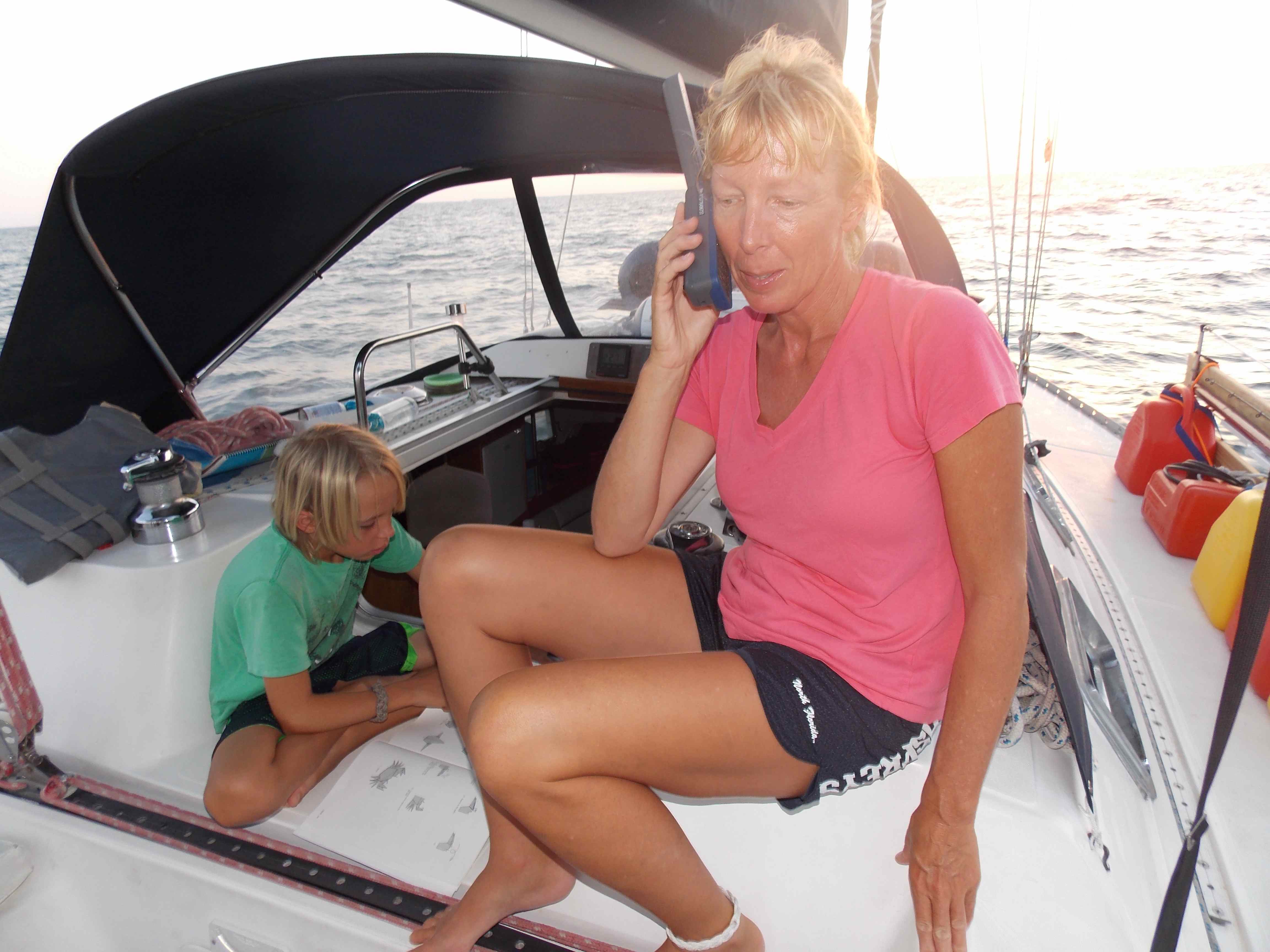
Luckily the wind had picked up somewhat in the night and we were able to raise the jib for what appeared to be a long downwind run back to the states.  We weren’t moving quickly, but we were sailing and we had a buddy boat with us as we entered the early morning hours of Friday the 10th.  Lightening had been flashing off in the distance but now seemed to be gaining on us as we crawled our way closer to the coast.  We had bought towing insurance from Towboat US before leaving for the Bahamas and though we were too far out of range to hail them on the VHF or call them on our cell phone, luckily, we also had an Inmarsat satellite phone on board.  Their web site is www.explorersatellite.com.   That phone was the ace up our sleeve.

crossing 4

Christine using the Sat phone earlier calling friends to tell them we were crossing to Florida.

We pointed its antenna skyward and dialed Towboat US to arrange for a tow back to Ft. Pierce.  We were told our policy only covered the first $50 of the tow and we would have to pay the balance.  Minutes ticked by the 1 hour balance on our sat phone as we sorted out the error with Towboat US.  After finding the error, they assured us the tow would be covered.  We had called them shortly after 12:30am and were no closer to getting a tow 2 hours later.  We were still too far out and would have to get closer before they would send out a boat and needed time to assemble the crew.

A few squalls came upon us with thunder, lightening, clocking wind and sheets of rain.  It was disorienting when they hit and took great effort to keep sailing on our bearing

Unsure about the arrival of our tow and now without even the wind to move us, we drifted into the gulf stream.  Christine had 6 AIS targets at one point on our chartplotter and she could only visually see the lights of 1 boat.  If we were to lose our last VHF (our other 2 VHFs failed earlier in the evening), we would have no way to hail an approaching ship and no way to maneuver.  Rick on Makana suggested using our dinghy as a means of propulsion until our tow arrived and we concluded we had little choice but to start the process of putting the dinghy in the water.  We dropped our sails and started the process of hoisting our dinghy over the side.  I put on my harness and tether as we began the awkward task of lowering the dinghy into the swells and attaching the outboard.

I asked Christine to call the Coast Guard and give them our position.  Makana had moved out of VHF range from us and was therefore not able to relay.  While we were not in imminent danger and the Coast Guard could not come to our aid, they did begin relaying our position to Towboat US.  It was also a relief to know they would maintain contact with us every half hour until our tow arrived.  We continued the process of lashing the dinghy to the side of the boat and were able to move ahead at close to 3 knots until the wind lightly filled in again.

We heard the hails from the Towboat US captain as he zeroed in on our position.  Shortly after 8:00am, I slipped the tow line around our bow cleat.  We were so glad for the assistance I didn’t ask where the crew was that he had been waiting to assemble.  Six more hours passed as we were towed the last long miles to Ft. Pierce.

crossing 10

crossing 10

crossing 11

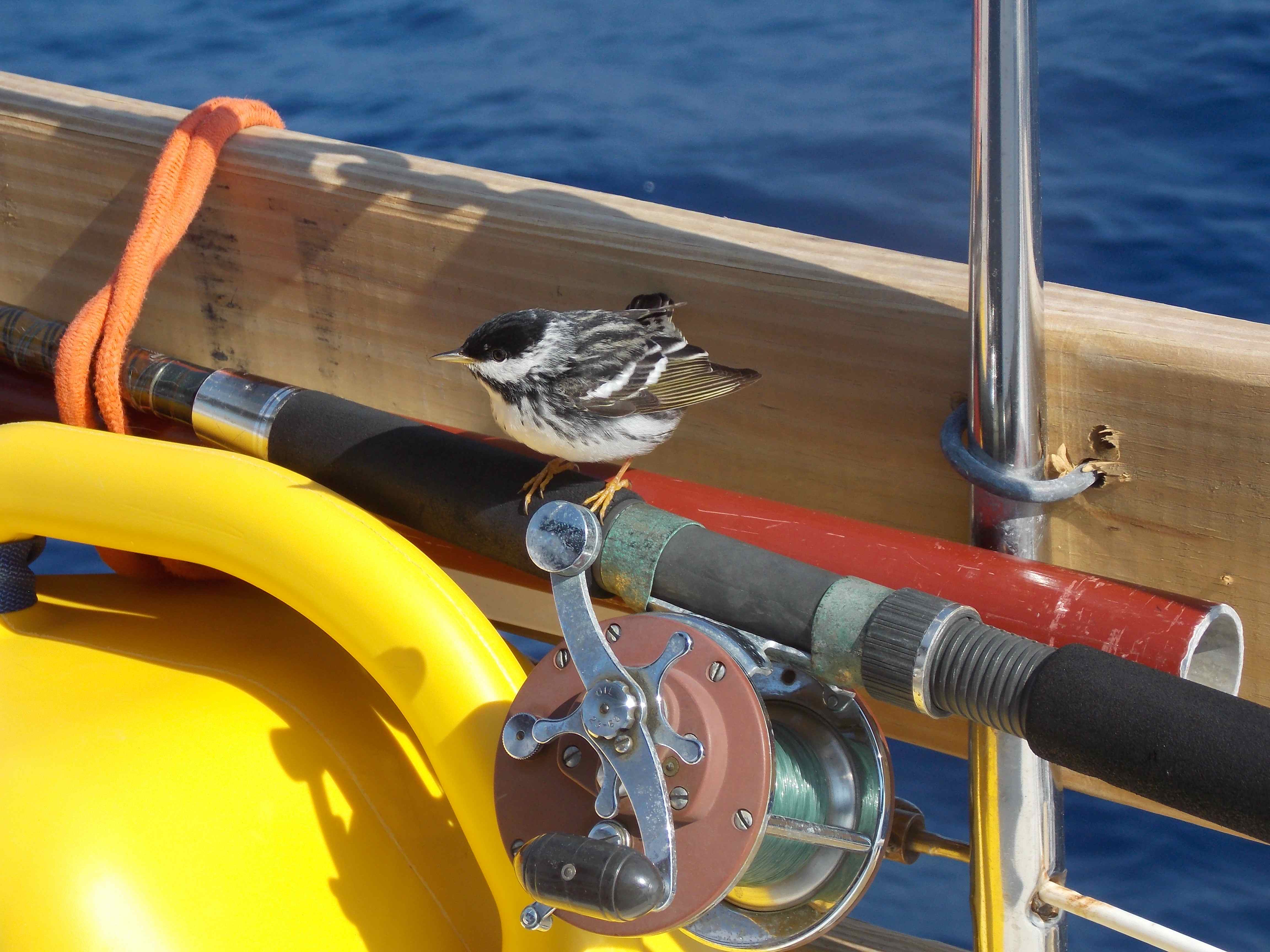
We were visited by a blackpole warbler on the way to Florida.

Low on fuel, the captain of our towing vessel passed us off to another boat for the final escort into the marina.  It was with a sigh of relief that we stepped off our boat at Harbor View Marina hours after leaving Foxtown.

We cleared customs but not before I had placed the order for a new water pump!

Fair Winds,

Mark

Hatchet Bay Cave by Mark

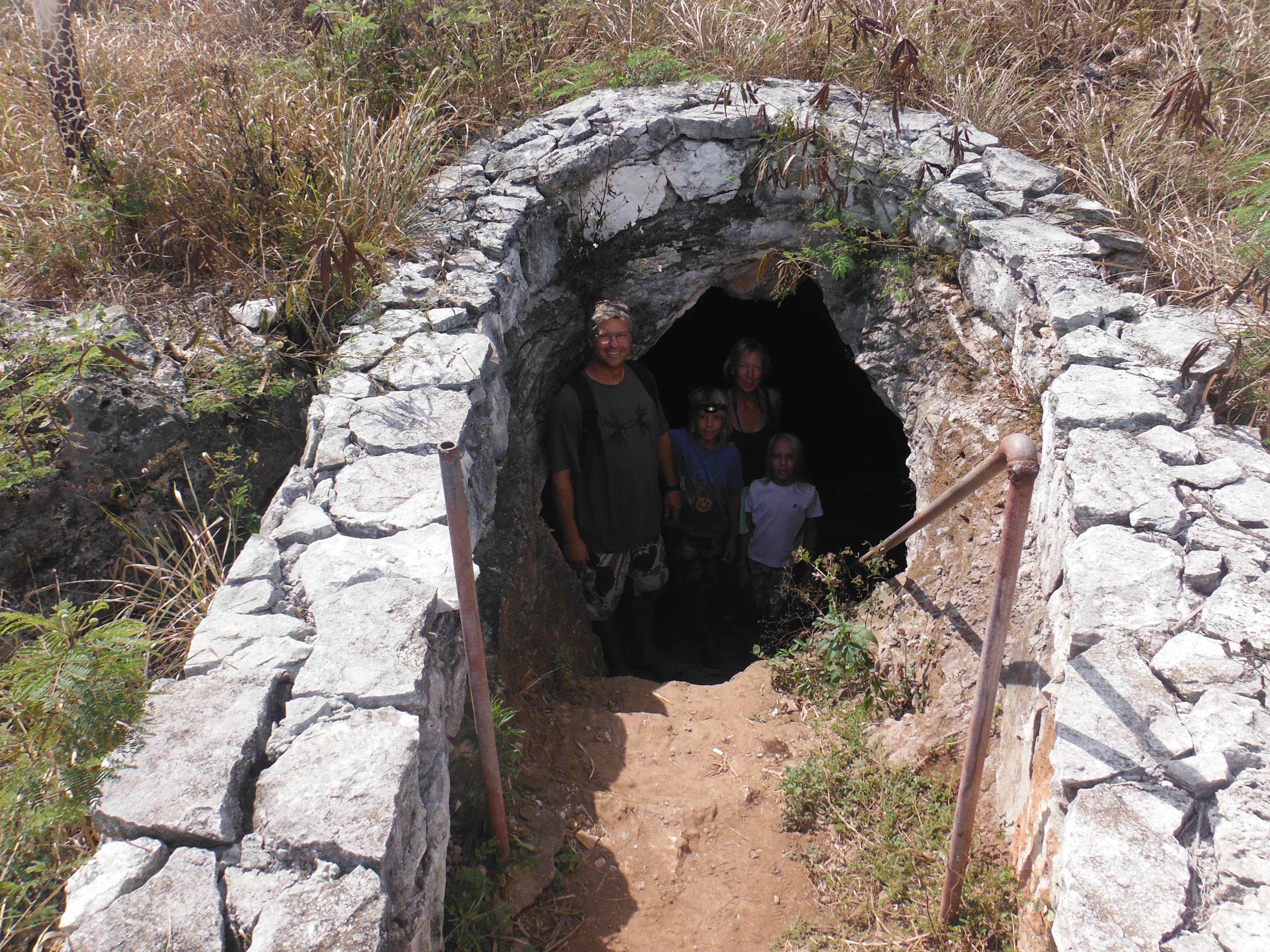
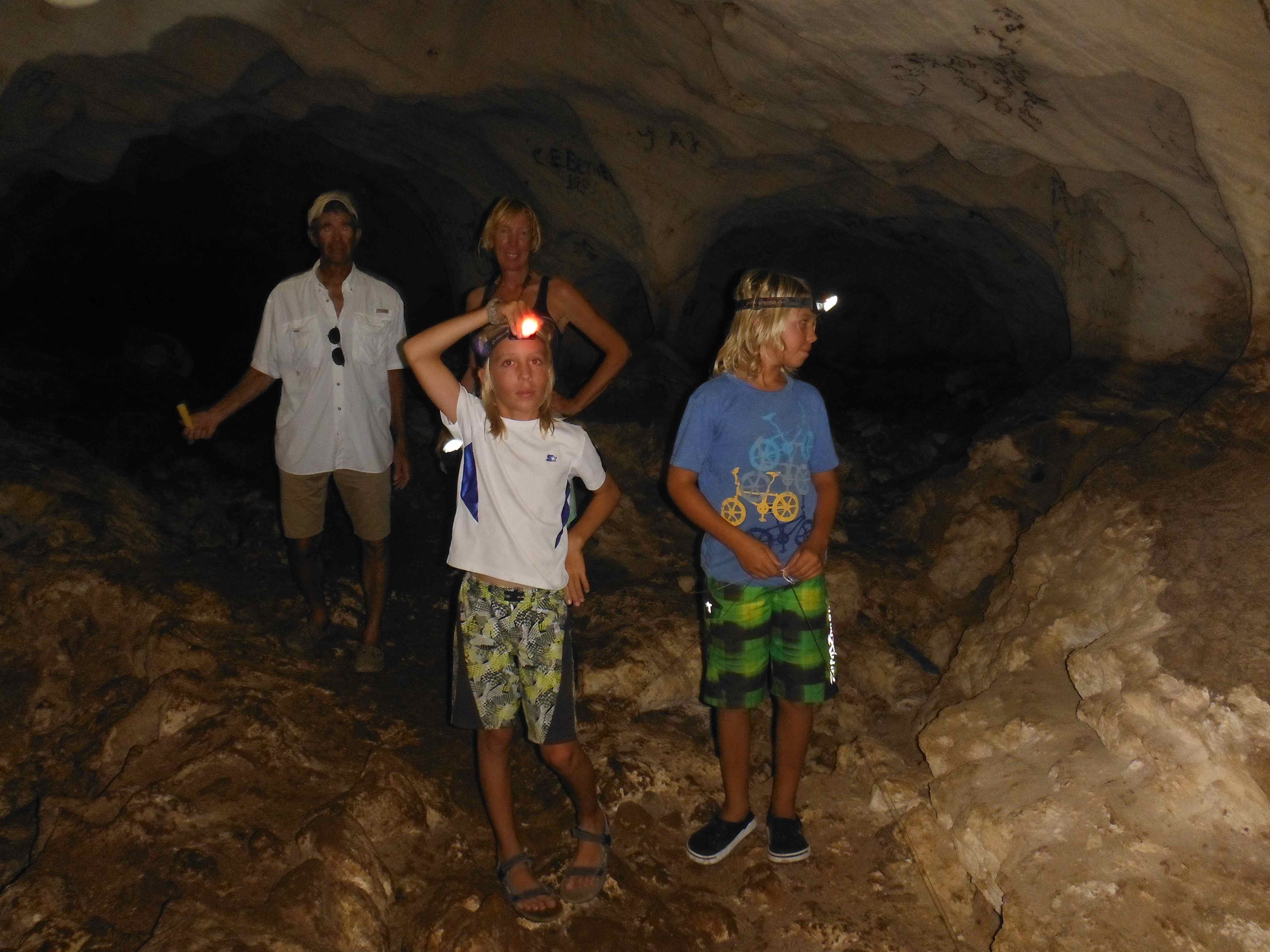
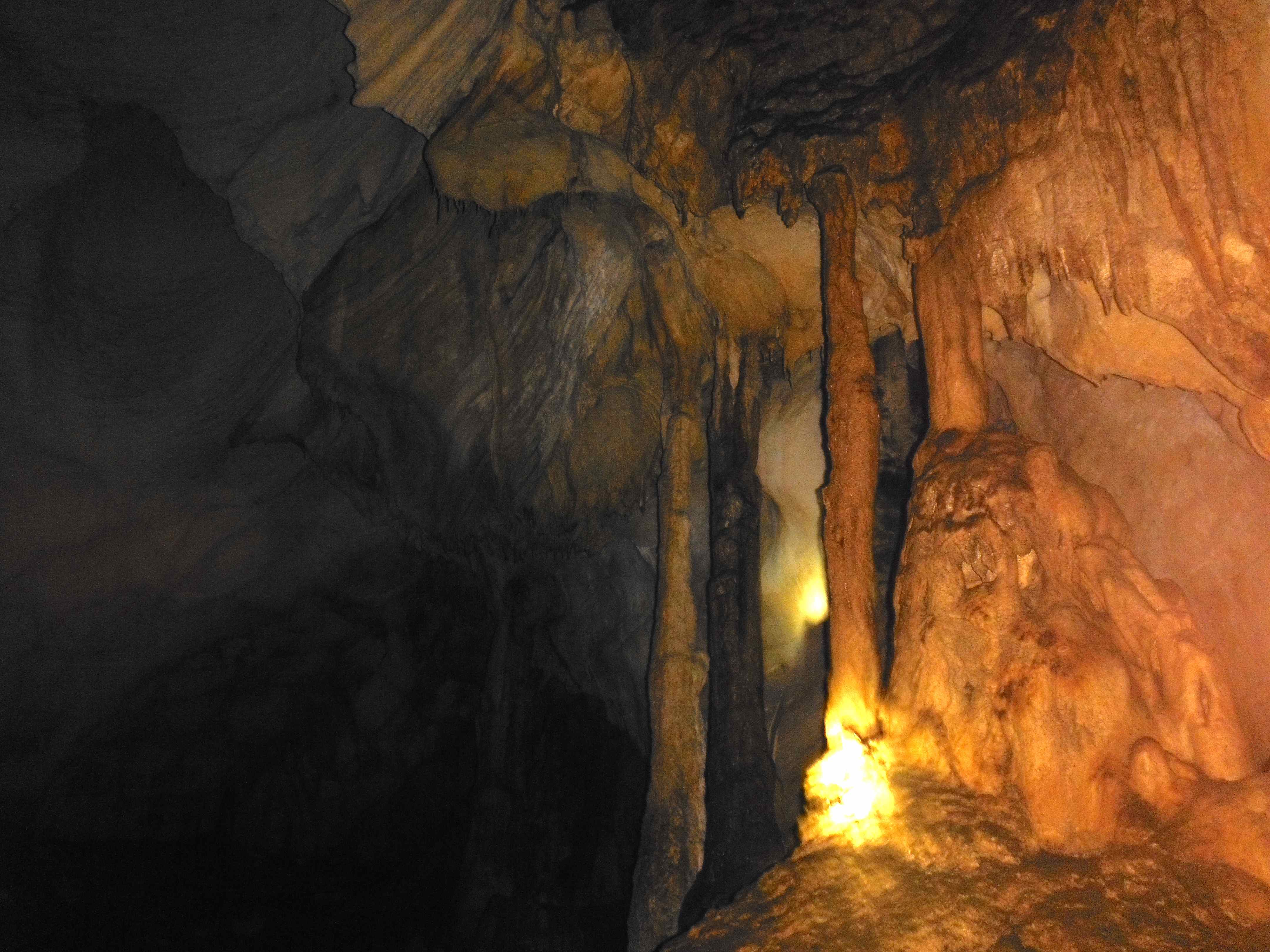
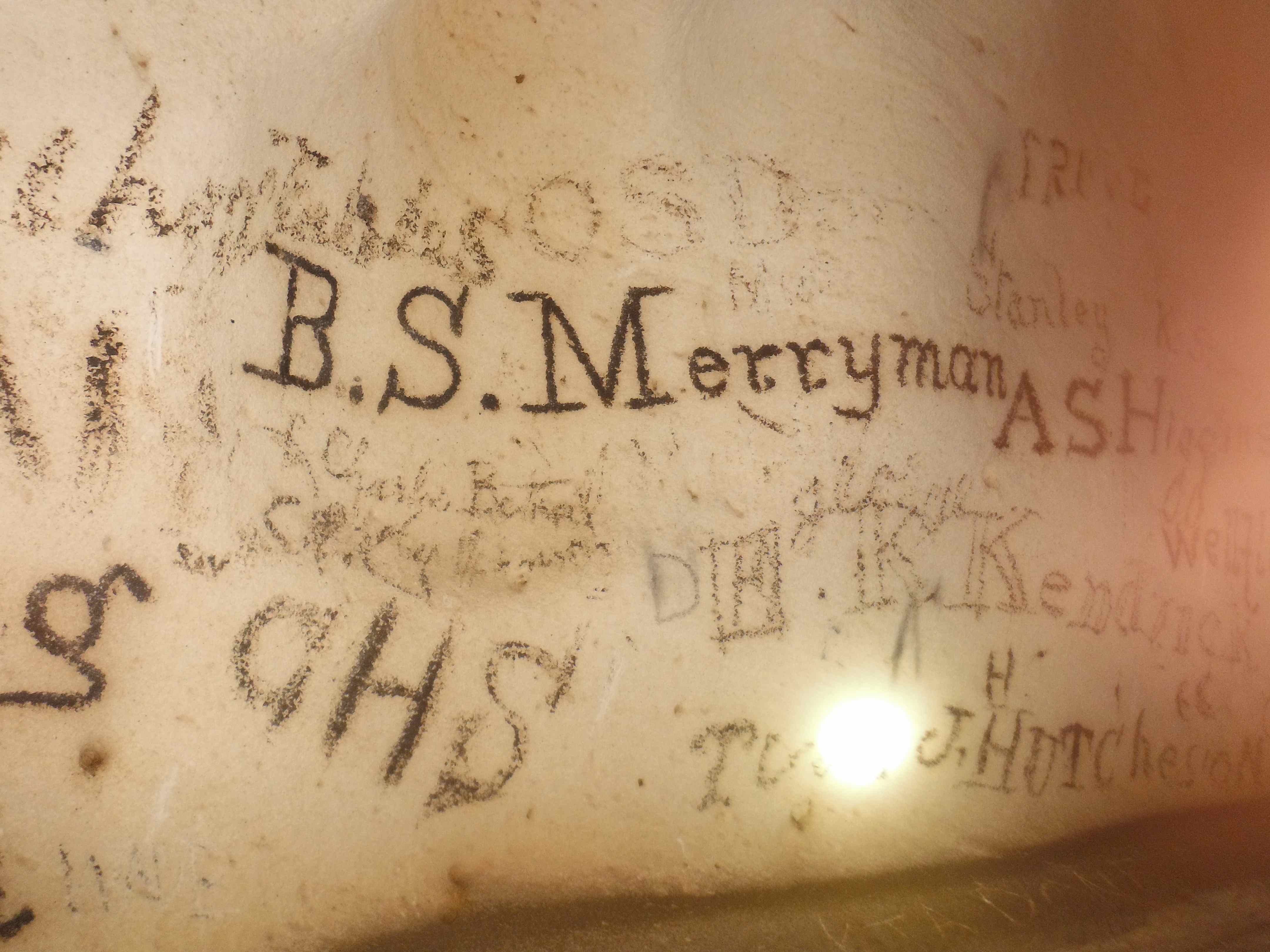
The day after our arrival to Eleuthera our friend Tom rented a car and invited us to travel the island with him.  On the way back to Rock Sound we stopped at Hatchet Bay Caves for a bit of spelunking.  The names of many former visitors to the cave were written on the walls in spray paint by the more recent tourists, and in what appeared to be soot, by the caves earliest visitors.

Cave entrance.

Cave entrance.

Hatchet sign

Sign at cave entrance.

.Who were those early visitors that wrote their names on the walls of that cave in soot and can be so clearly read even today.  Were they some of the early Loyalists who moved to the island after the Revolutionary war?  Perhaps, they are the names of some of the slaves they brought with them if they could write.  One can imagine them steeling away from one of the early plantations so destined for failure on these unfertile islands.  Escaping the monotony of building one of the many stone fences we have seen on the islands to record their names on the walls of the cave.

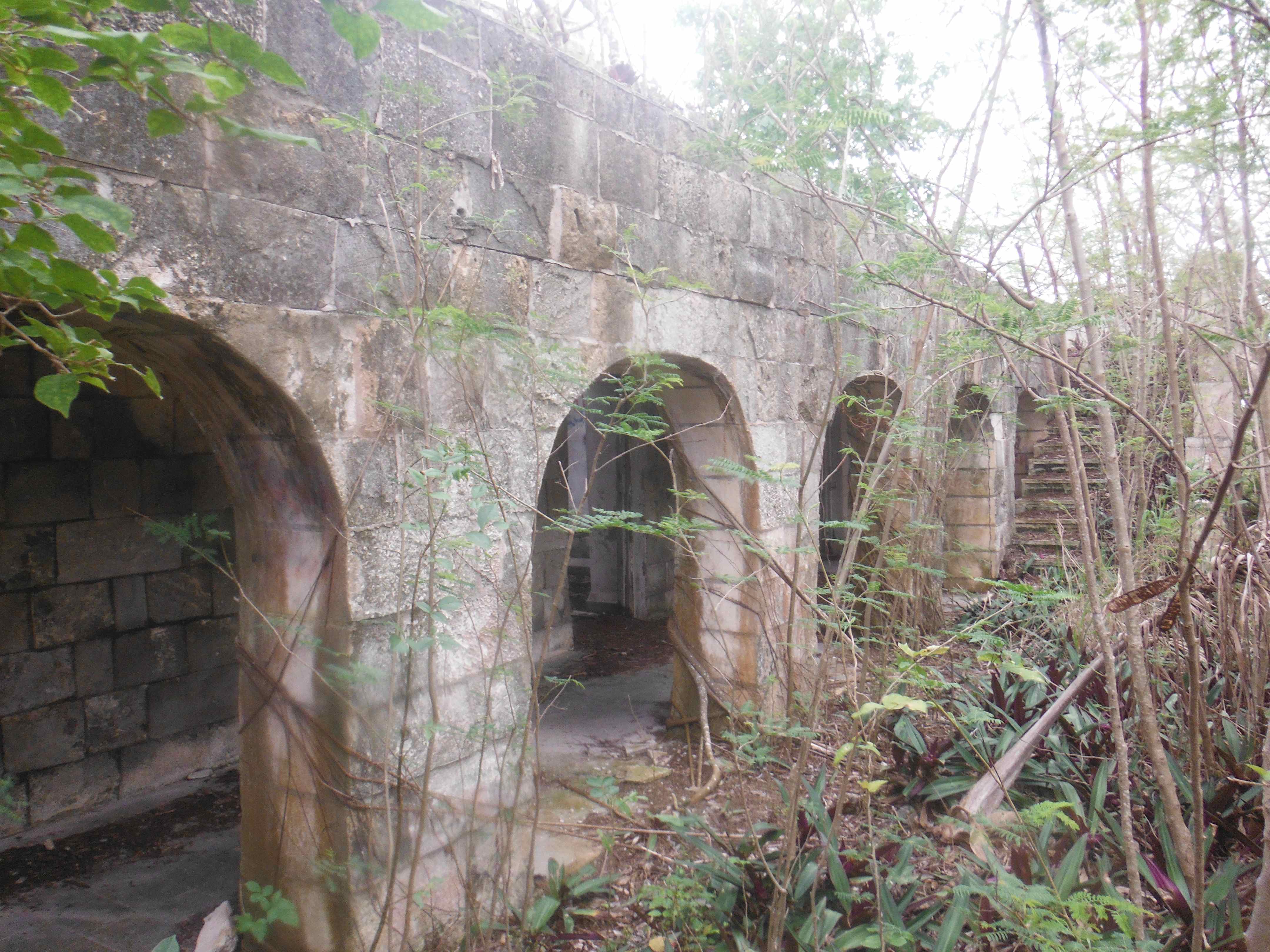
Ruins on Royal Island.

Ruins on Royal Island.

Many of the blacks in the Bahamas took the names of the landowners they worked for.  We saw the last name of Rolle many times in the Exumas before we realized it was because those former slaves had adopted the names of their plantation owners.  I did see a couple of tufts of cotton still growing next to a house in Hatchet Bay and some pineapples are grown on the island but all of those first plantations are little more than the foundations of failure today.

The names could have also been written by some of the blacks that had escaped slavery in the United States and fled to the Bahamas.

Exploring passageways.

Exploring passageways.

A hundred years before the Loyalists arrived in the Bahamas there were the Adventurers, who were seeking religious freedom from England.  The name Eleutheria is taken from the Greek word meaning freedom.  The first Adventurers actually shipwrecked on the reefs of Eleuthera in 1648.  They carved out a meager existence on the island and held religious services in another natural shelter called Preachers Cave on the east side of Eleuthera.  Their descendents are still living on the island today.  Many live and work not far from the place where they landed, in Spanish Wells.  With an accent unique to themselves they have a thriving fishing industry.  All of the people who fish for lobster own shares in their boats.  In this way they form a co-op pooling their resources and sharing the profits.  They are understandably proud that many of the young people choose to stay on the island and don’t have to move to Nassau or the US to find work.

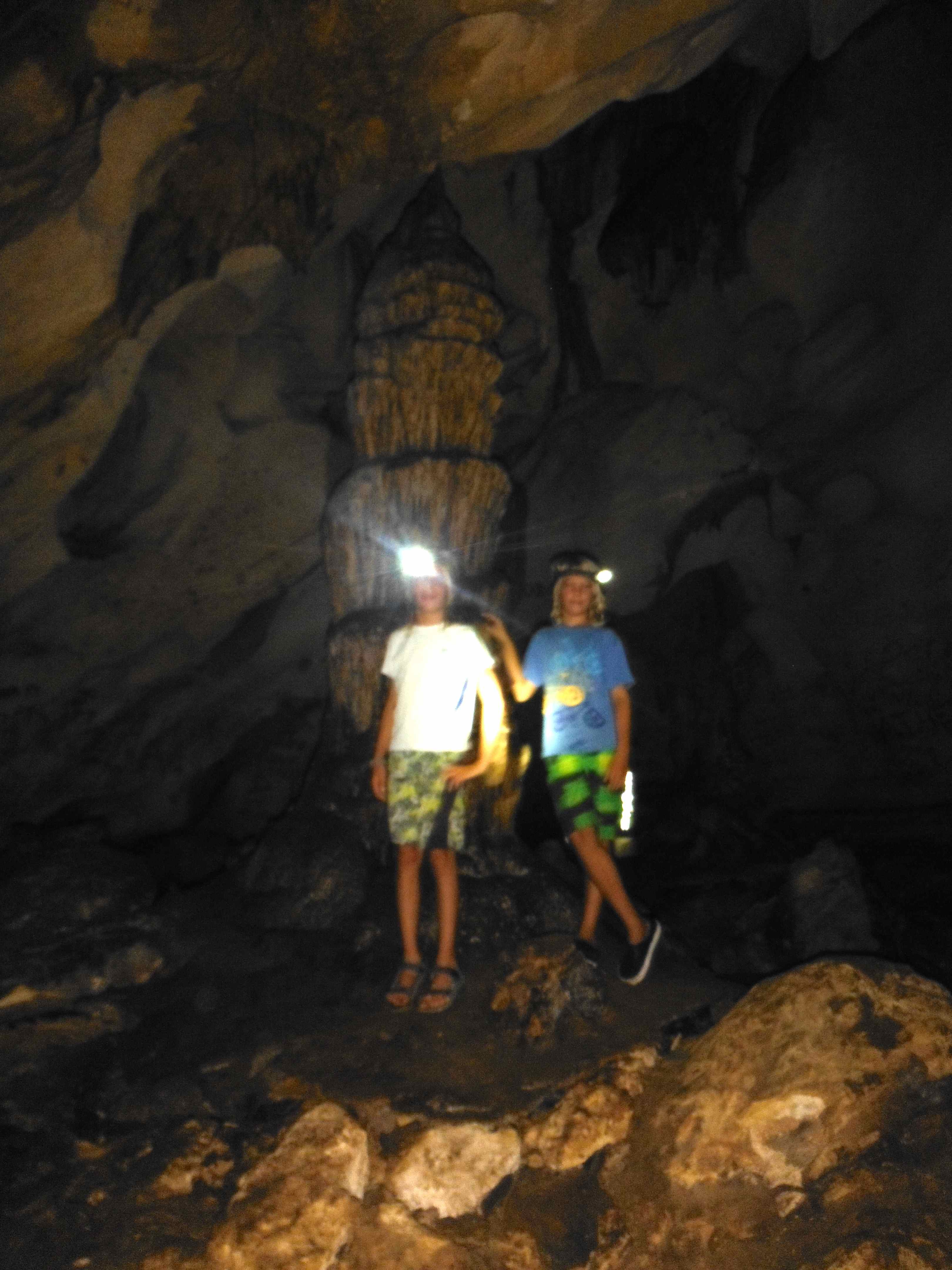
hatchet columns

Large column in cave.

Large column in cave.

We did however feel slightly out of place in their tightly knit community.  It was almost as if we had entered a real life version of M. Night Shyamalan’s “The Village”.  Blond haired blue-eyed Eleuthreans sped about in golf carts and spoke with a drawl that sounded like a mix of the old south and British accents combined.  Surely their descendents must have written their names on the walls of Hatchet Bay Cave.   Just like the names of people we saw on our trip leaving Idaho, written with axle grease on rocks as they traveled the Oregon Trail, those immigrants and Bahamian Adventurers were recording their names in the landscape they passed through.   I wonder if the blogs today will last as long as the soot and axle grease of those early immigrants.

Names of previous explorers.

Names of previous explorers.

Mark

Running With the Nordhavns by Mark

It was back at Lee Stocking Island when we met Don and Debbie at a bonfire on the beach.  Our boys were busy building a fort while we talked with the other cruisers and watched another sunset over the Exumas.  The next day, we met Don and Debbie again at the old research lab on the island.  Don started explaining fuses and electrical panels to our boys with a home field advantage he had gained from years of experience as an electrical contractor.  Debbie had been a teacher and took a liking to our boys and asked them how they liked the cruising life and schooling on a boat.

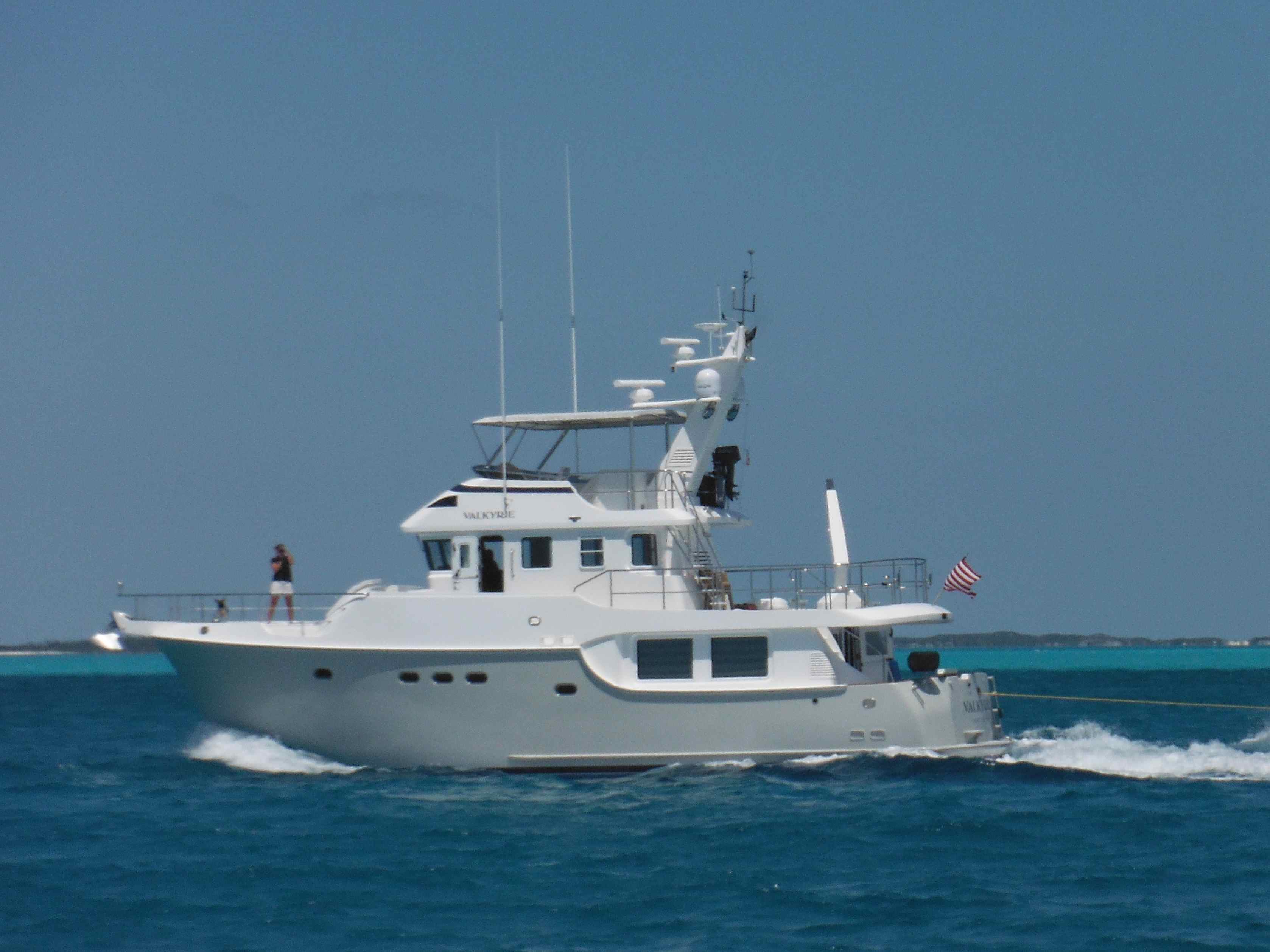
We told them about all of the exciting things we had discovered on the island and that the boys were busy writing a couple of spooky stories about the island and the research lab.  Don and Debbie couldn’t wait to hear their tales and we promised them the stories as the boys completed their chapters.  Over the next several days, and anchorages, as we traveled up the Exumas, the boys read them their stories over the VHF radio.  Finally at Shroud Cay we anchored Truansea next to Don and Debbie on their boat Valkyrie, a Nordhavn 55.  They had been traveling with a friend of theirs, Tom, who also owns a Nordhavn 46 named Lucent.

Valkyrie cruising to Shroud Cay.

Valkyrie cruising to Shroud Cay.

eggs

Coloring Easter eggs.

The engine room showing the main and secondary engines.

The engine room showing the main and secondary engines.

helm D&D & dog

Don, Debbie and Roux at the helm.

Don, Debbie and Tom all came over to our boat for Easter morning (7am) as the boys searched for eggs.  Who knew the Easter bunny could swim!

Searching for eggs on Truansea.

Searching for eggs on Truansea.

Valkyrie moved on, back towards the states via Nassau while we waited for a break in the weather to cross to Eleuthera.

Tom raising the anchor on Lucent.

Tom raising the anchor on Lucent.

We caught up with Tom the next day as we drifted into Rock Sound but that’s another story.  Suffice to say, I was happy we hadn’t chose to sail the day before!

Till next time,

Mark

Recipes for conversation by Mark

We have now been at Lee Stocking Island, the site of an abandoned oceanographic research facility, for 5 days.  Since we are not in a big rush to move north (the wind has been in the wrong direction for us to sail), we have been content to spend our time exploring the island and made friends with some of the other boaters in the anchorage.  I thought that the reader might enjoy meeting them yourself so asked two couples on different boats a few questions about themselves and their boats.

First Nanny

The boat just astern of us at the moment is called First Nanny.  She is a Cape Islander 36.  Her owners are Tony and Renate, originally from Berlin, Germany they bought a piece of land and built a cabin in Nova Scotia after choosing to change their lifestyle and retire early.  After that they started thinking about cruising on a traditional boat.  Tony had thought about building his own boat but ultimately he chose to renovate a retired lobster boat because he liked the looks of a more traditional craft.  Built for heavy work in the North Atlantic it has a low sheer aft and a precipitous bow.

First Nanny

First Nanny

first2

Tony and Renate aboard First Nanny.

Logan and Cole in First Nanny's cabin.

Logan and Cole in First Nanny’s cabin.

Christine & Logan in First Nanny's cabin.

Christine & Logan in First Nanny’s galley.

I have read of accounts of sailors who have seen apparitions while cruising so I listened eagerly when Tony related an experience he had on their first gulf crossing. They were crossing the Gulfstream at night when all of the electronics on their boat went down.  With no VHF or chart plotter to guide him thru the darkness he was trying to troubleshoot his systems when he saw the image of a bearded man on the forward deck looking back at him through the glass.  He spoke to Tony and told him not to worry, that he just needed a few minutes.  After ten minutes all of the electronics began working again.  It was some time later when Tony realized that the person he saw on deck was the same fisherman that is in a very early photograph of the boat when it was used for lobster fishing that he has framed in the cabin.

Picture of First Nanny when it was a lobster boat.

Picture of First Nanny when it was a lobster boat.

We were invited over to their boat for dinner one evening and Renate made a delicious fish soup and an equally fantastic potato salad another night.

Sea Camp

Our other boat neighbors are Bud and Eileen on Sea Camp a Witby 42.  Their boat is a center cockpit design with a spacious aft cabin.  When they purchased their boat they had a five-year plan for cruising the Caribbean.  The boat had come with and engine driven refrigeration system but that required running their 65 hp Perkins twice a day for an hour to cool down the coldplates.  Bud has since converted to a more conventional 12v compressor. His large battery bank is kept topped off with a wind turbine and a 200w solar panel mounted to the top of his davits.  Six batteries onboard are capable of storing an impressive 1400 amp hours!  As a comparison our single house battery stores a more modest 230 amp hours, an amount that has been adequate for our needs but it just goes to show the lengths you need to go to get those precious ice cubes in ones drink.  It’s also why we like to suggest having cocktails on their boat whenever the opportunity permits!

Sea Camp

Sea Camp leaving Lee Stocking Island.

Bud & Eileen in s/v Sea Camp's cockpit.

Bud & Eileen in s/v Sea Camp’s cockpit.

If the wind doesn’t blow and the sun refuses to shine they still have a 2kw generator as a last resort but there are few days in the Bahamas I think when they would have to resort to using the generator.  They bought their boat on the Chesapeake and have been sailing in the Bahamas for five years now.  They still have their home in Manitoba and have another lake sailing boat there, a C&C 26 named Gypsy that they sailed with their two children before purchasing their Whitby.

Bud showing the boys the engine.

Bud showing the boys the engine.

Bud had worked in Canada as an electrical engineer and Eileen taught high school chemistry.  While they have enjoyed the cruising lifestyle they are thinking about the next adventure and would like to travel abroad, perhaps living in different countries for several months at a time.

One day when Christine was contemplating how to cook up a squash on the boat for a little variety Eileen offered the following recipe for yet another fantastic soup.

We have enjoyed listening to their Canadian perspectives almost as much as the sound of another tray of ice cubes being broken into!

Squash soup

2 small butternuts cubed (we used 1 pumpkin)
1 medium onion chopped
3 stalks celery chopped
3 carrots sliced
¼ cup brown sugar
1 T cinnamon
¼ tsp nutmeg
1 tsp curry
¼ tsp cayenne
8 cups water

Simmer until vegetables are tender then puree.  We do not have a blender so we lightly mashed it with a large spoon.

Serve with a dollop of sour cream or yogurt.  We did not have either of these and it was still fantastic.

Mark

The Clog Before the Storm by Mark
I noticed on a trip to George Town that the stream of cooling water on our outboard was barely coming out at a trickle, so I pulled the lower end off and replaced the impeller.  I performed the operation in the cockpit with the assistance of another boat neighbor, Jim on s/v Lameroo.  Both the impeller and the gear oil needed to be changed.  Unfortunately the water had no more pressure behind it after we had it all reassembled.  Logan suggested that we poke a wire into the end of the tube in case something was blocking the flow.

Changing the impeller on our outboard.

Changing the impeller on our outboard.

Darkness and another approaching cold front halted further progress on the outboard and we all took turns peeking out from behind the dodger as the wind picked up to nearly 30 knots!
People were calling other boats on the VHF who had started dragging their anchors.  We had a trawler anchored in front of us a little closer than I would have preferred.  The owner was a former pastor and while many people take comfort in the thought of the hand-of-god, the thought of the hull-of-god crashing into our boat kept me awake half the night.

The gathering storm.

The gathering storm.

The next morning I took Logan’s suggestion and cleared the cooling water tube on the outboard.  It was full of salt crystals and after I plugged the hose back together, the stream of water was back to its former force.

It was another lesson in trouble shooting for the boys, and I was glad they discovered that the root cause of the problem was the simpler of the solutions.  I just wish it would have been the first thing I had tried and not the last!

You may get the feeling from my posts that we spend a great deal of time fixing things that break.   That couldn’t be more true.  More than a few other sailors have told me that cruising amounts to little more than fixing your boat in exotic locations!

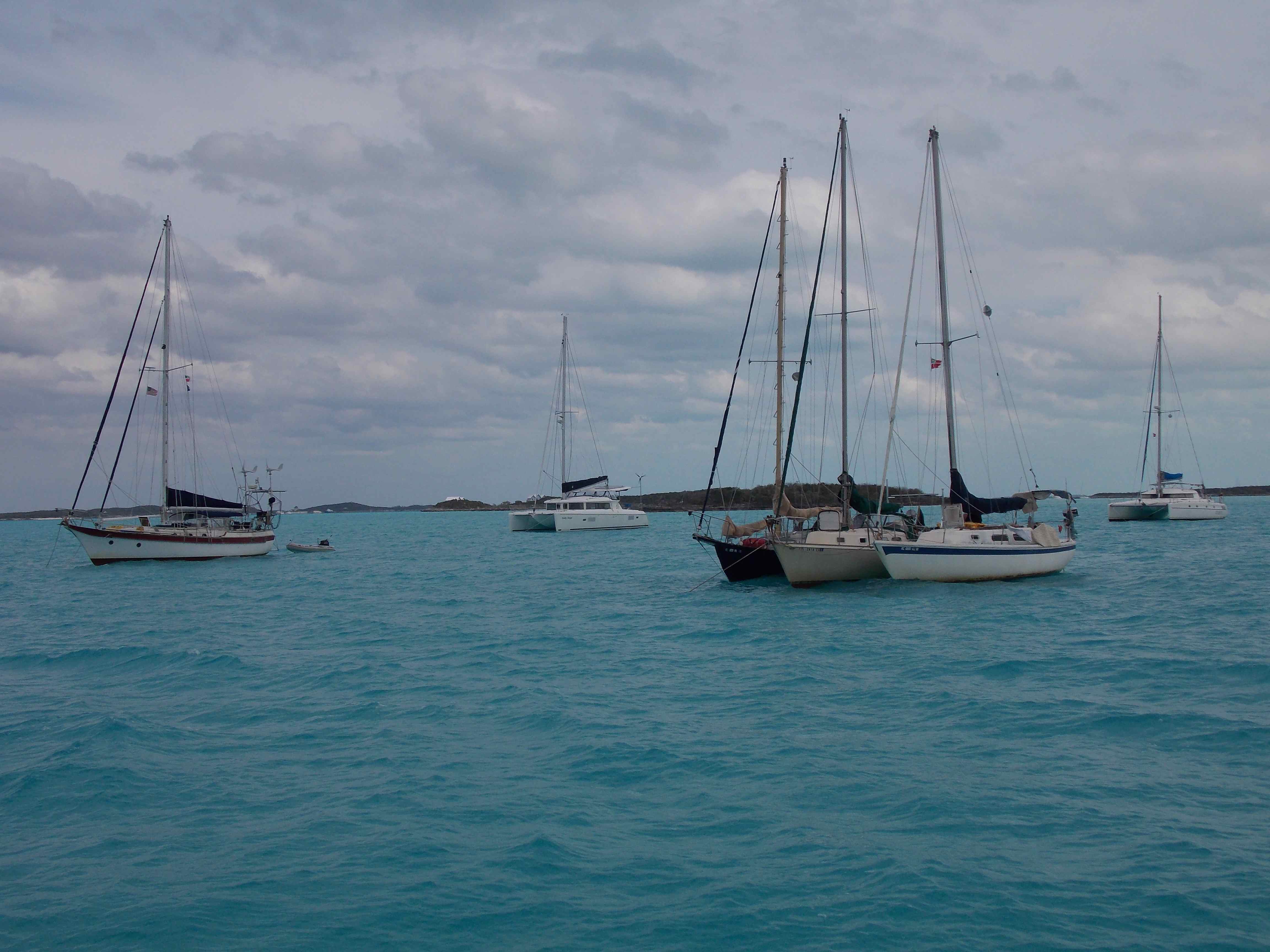
Monohulls cats and Trimarans?  These are the people in our neighborhood.

Monohulls, cats, and Trimarans? These are the people in our neighborhood.

Sometimes I think we have stayed in George Town too long but getting to know numerous other cruisers has been worth it.  Our boys have seen the insides of several boats and met just as many interesting captains and their crews.

Mark